

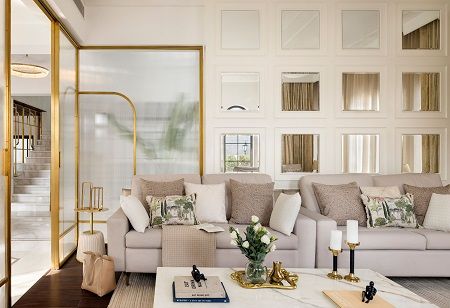
Gold is undergoing a quiet transformation in the world of interior design. Once associated with bold glamour and maximalist expression, it is now emerging as a subtle, grounded detail that brings warmth and sophistication to contemporary homes. Designers are moving away from glossy, ornamental finishes and embracing muted metals that blend seamlessly into modern spaces.
This shift is rooted in a broader movement toward calm, cohesive interiors where materials carry emotional resonance. In Indian homes, where texture, colour, and craftsmanship play a significant role, gold’s evolution from statement to subtlety is particularly visible.
Aishwarya Bansal, Co-founder of Smartworld Developers, explains this change through the lens of everyday living. “Gold, when used thoughtfully, is bringing a sense of effortless luxury to modern interiors. The key is in how it is being placed. It is being used naturally to add to the ambience, such as in a pendant light over the dining table, on the edge of a mirror, or as a cabinet handle, rather than being scattered throughout the space.”
This restrained use is also reshaping minimalist and contemporary design themes. Instead of functioning as a decorative centrepiece, gold is becoming a quiet anchor, adding warmth without disturbing the visual harmony. “In minimalist or contemporary spaces, gold works best as an accent where it adds depth to the interiors without disturbing the calmness,” she notes. “Small details like the edging of furniture, discreet hardware, simple frames, and artefacts introduce warmth and texture while keeping the palette clean.”
Colour continues to play a defining role in this trend. The most natural pairings are muted neutrals and earthy tones that allow the metal to emerge gently. Deep blues and greens are also gaining popularity for the understated richness they create. As Bansal describes, “Muted, layered tones allow gold to feel natural within a modern home… The most balanced spaces often follow a simple rule: two base tones and one accent. This keeps the palette harmonious and lets gold remain a subtle highlight rather than the focus.”
Also Read: The New Blisscape sofa by Ludovica Serafini + Roberto Palomba
Materials further influence how gold settles into a space. Matte stone, natural wood, soft fabrics, and aged metal textures help balance the warmth of gold and remove any hint of excess. “Contrast gives gold its character,” she explains. “Pairing it with warm metallics, matte stone, natural wood, or soft textiles creates a depth and balance. Brushed or aged finishes work especially well, offering a sense of craftsmanship without the glare of high polish.”
The overall approach reflects a shift in how homeowners perceive luxury, moving from visual intensity to a more tactile, lived-in aesthetic. As Bansal sums it up, “The use of gold in interiors is shifting from statement to subtlety… Today, gold is not a showpiece; it’s a quiet layer that adds humanity to modern design.”
In a market where design sensibilities are becoming more refined and experience-driven, gold’s evolution marks a meaningful change, one where luxury is expressed not through shine, but through softness, warmth, and intention.
We use cookies to ensure you get the best experience on our website. Read more...
Copyright © 2026 HomesIndiaMagazine. All Rights Reserved.
