
Commercial Investments: REITs vs. Physical Property in 2026 Comparison
By Manjunath Vendan, Correspondent at Homes India

Commercial Investments: REITs vs. Physical Property in 2026 Comparison

REITs vs. Physical Property in 2026 Comparison

As commercial real estate trends in 2026 continue to evolve, the debate around REITs vs. Physical Property in 2026 is becoming central to modern investment strategies.

With the rise of digital economies, hybrid work models, and institutional-grade real estate products becoming accessible to retail investors, commercial real estate is no longer a one-size-fits-all opportunity.

Investors today are not just asking where to invest. But also, how much control do they need? How liquid should their investment be? And how efficiently can it generate income?
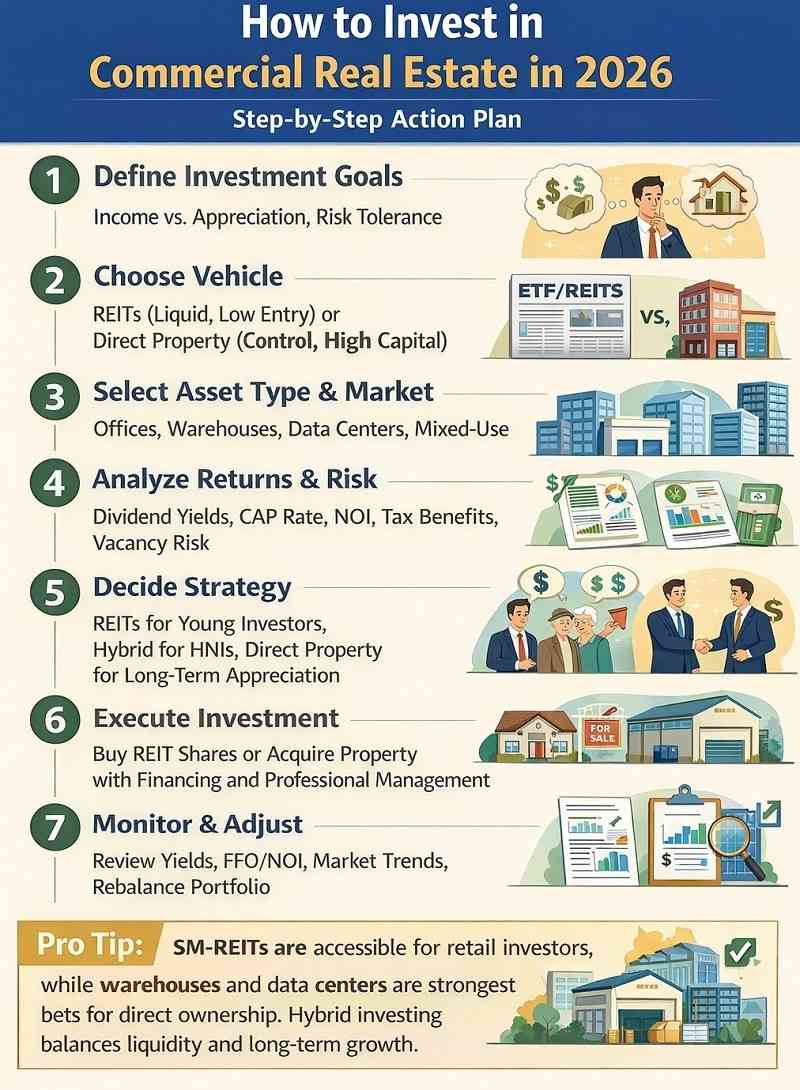
6. How to Invest in Commercial Real Estate in 2026: Step-by-Step Action Plan

1. Define Investment Goals

Start by clearly identifying your objective:

  • Income-focused investors should prioritize stable cash flows (REIT dividends or rental income).
  • Growth-focused investors should look for capital appreciation opportunities.
  • Assess your risk tolerance, investment horizon, and liquidity needs—this will determine whether REITs or direct property is more suitable.

2. Choose the Right Investment Vehicle

  • REITs: Ideal for investors seeking liquidity, diversification, and low entry barriers. They can be bought easily through stock exchanges.
  • Direct Property: Suitable for investors who want full control, customization, and long-term wealth creation, but can commit significant capital and time.

Your choice should align with how actively you want to manage your investment.


3. Select the Right Asset Type & Market

Focus on sectors driving commercial real estate trends in 2026:

  • Offices: Prefer Grade A or value-add opportunities in prime locations
  • Warehouses & Logistics: High demand due to e-commerce and supply chain expansion
  • Data Centers: Rapid growth driven by AI and cloud infrastructure
  • Mixed-use developments: Provide diversification within a single asset

Also evaluate location fundamentals, tenant demand, and infrastructure growth.


4. Analyze Returns & Risk Thoroughly

Before investing, evaluate key financial metrics:

  • REITs: Dividend yield (5–7%), FFO growth (~6%), occupancy rates
  • Direct Property: CAP rate, NOI (Net Operating Income), rental yield (6–9%)

Additionally, assess:

  • Vacancy risk and tenant quality
  • Maintenance and operational costs
  • Tax implications, including depreciation benefits for direct property

5. Decide Your Investment Strategy

Tailor your approach based on your profile:

  • Young professionals: Focus on REITs or SM-REITs for affordability and flexibility
  • Retirees: Prioritize stable income through REIT dividends or leased commercial assets
  • HNIs / Institutional investors: Use a hybrid strategy, combining REITs for liquidity and direct property for appreciation and tax efficiency

6. Execute the Investment

  • For REITs:
    • Open or use an existing brokerage account
    • Select REITs based on asset quality, yield, and management track record
    • Invest and consider reinvesting dividends for compounding
  • For Direct Property:
  • Conduct detailed due diligence (legal, financial, and technical)
  • Secure financing if required
  • Finalize purchase and consider hiring professional property managers for efficient operations

7. Monitor, Optimize, and Rebalance

Investment doesn’t end after purchase. Regularly:

  • Track REIT performance, dividend payouts, and market trends
  • Review rental income, occupancy levels, and expenses for direct property
  • Rebalance your portfolio based on changing market conditions and personal goals

Pro Tip for 2026: SM-REITs are making commercial real estate accessible to retail investors, while warehouses and data centers remain the strongest bets for direct ownership. A hybrid strategy: combining REITs for liquidity and direct property for long-term appreciation, offers the most balanced and future-ready approach.

Also Read: 2026 Realty Outlook: Under-Construction Premium Housing Stays Buoyant

🍪 Do you like Cookies?

We use cookies to ensure you get the best experience on our website. Read more...