

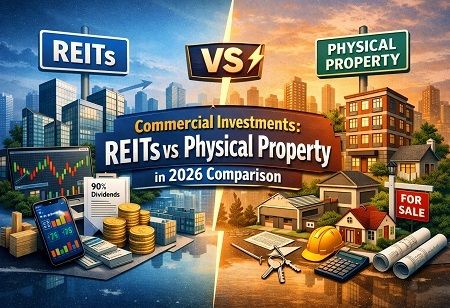
As commercial real estate trends in 2026 continue to evolve, the debate around REITs vs. Physical Property in 2026 is becoming central to modern investment strategies.
With the rise of digital economies, hybrid work models, and institutional-grade real estate products becoming accessible to retail investors, commercial real estate is no longer a one-size-fits-all opportunity.
Investors today are not just asking where to invest. But also, how much control do they need? How liquid should their investment be? And how efficiently can it generate income?
Also Read: Housing Demand to Surge as REIT Market Targets Rs 10.8 Trillion
The commercial real estate landscape in 2026 is more accessible and dynamic than ever before. Structural shifts in how businesses operate, combined with financial innovation, have transformed real estate from a capital-heavy, exclusive asset class into a flexible and multi-format investment opportunity.
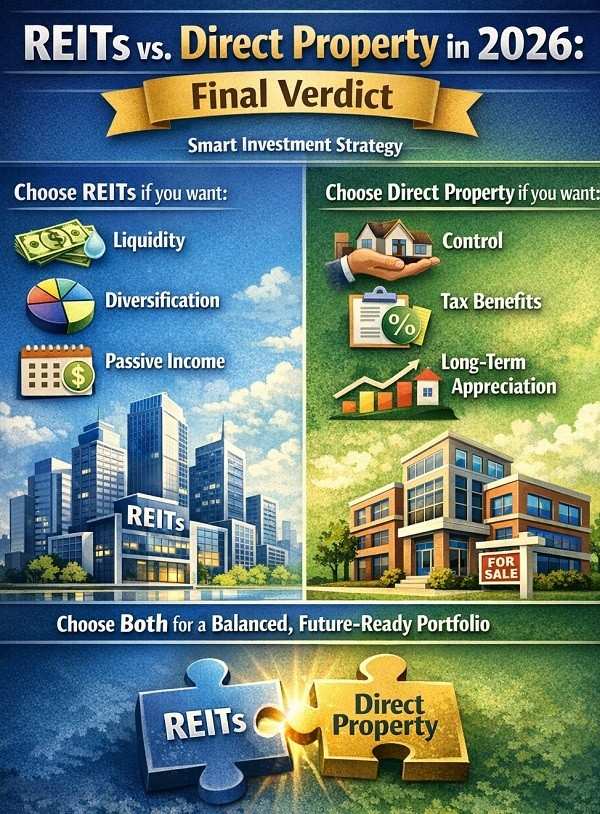
With the rise of REITs, investors no longer need massive capital to participate in high-quality, income-generating real estate assets. These instruments provide liquidity, diversification, and professional management, making them especially attractive in an environment where adaptability and cash flow visibility are key. At the same time, direct ownership continues to offer unmatched control, customization, and long-term wealth-building potential, particularly for those who can actively manage assets and navigate market cycles.
What truly defines successful investing in 2026, however, is not choosing one over the other. It is understanding how both vehicles complement each other. The smartest investors are strategically combining REITs and direct property to balance liquidity with stability, and passive income with capital appreciation.
We use cookies to ensure you get the best experience on our website. Read more...
Copyright © 2026 HomesIndiaMagazine. All Rights Reserved.
