

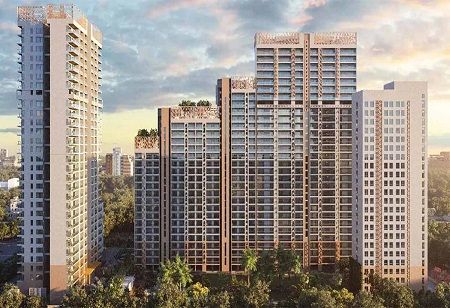
Delhi’s Master Plan 2047 proposes reducing the minimum land requirement for group housing redevelopment from 40,000 sq m to 3,000 sq m. The move could enable redevelopment of older DDA flats and generate around 7 lakh additional homes.
Delhi’s Master Plan 2047 has proposed significant changes to redevelopment regulations that could give a new lease of life to older DDA flats and group housing societies across the national capital. The proposals aim to unlock underutilised urban land, increase housing supply and modernise ageing residential developments.
One of the key changes is a sharp reduction in the minimum land requirement for group housing redevelopment from 40,000 square metres to 3,000 square metres. The change could bring a much larger number of smaller and older housing societies into the redevelopment framework. Where necessary, societies could also consider plot amalgamation to meet development requirements.
Also Read: Inside the Rise of SCO Plots on Dwarka Expressway, Gurugram
The proposed redevelopment push is expected to generate around 7 lakh additional homes, helping address Delhi’s growing housing demand. By enabling redevelopment on smaller land parcels, the policy could make it easier to replace ageing housing stock with modern residential developments featuring improved infrastructure and amenities.
The redevelopment provisions form part of a broader housing strategy under Master Plan for Delhi 2047, which seeks to accommodate a projected population of around 3.2 crore by 2047. The plan focuses on increasing housing supply through redevelopment, land pooling, higher-density development and other planned growth mechanisms.
For older DDA housing, redevelopment could address issues associated with ageing buildings, inadequate common facilities and outdated infrastructure. Modern projects can potentially incorporate improved water and sewage systems, parking, open spaces, energy-efficient buildings and better community amenities.
The lower land threshold could also change the economics of redevelopment for smaller residential societies. Earlier requirements made redevelopment difficult for many smaller housing clusters because they did not possess sufficiently large contiguous plots. The proposed 3,000-square-metre threshold could widen participation and allow more projects to be considered.
The policy is also expected to encourage more efficient utilisation of Delhi’s limited urban land. Rather than relying entirely on expansion into peripheral areas, redevelopment allows existing developed areas to accommodate additional housing through planned densification.
Also Read: Farmland Communities: Redefining Sustainable Living
The wider Master Plan 2047 includes several measures aimed at increasing housing availability, including affordable housing, rental housing, redevelopment of older settlements and land pooling. The DDA has also identified redevelopment of old housing as an important component of Delhi’s long-term urban transformation.
For real estate developers, the proposed changes could create new opportunities in established parts of Delhi where land availability is limited but demand remains strong. Redevelopment projects could allow developers to participate in the renewal of existing residential communities while creating additional housing capacity.
We use cookies to ensure you get the best experience on our website. Read more...
Copyright © 2026 HomesIndiaMagazine. All Rights Reserved.
