

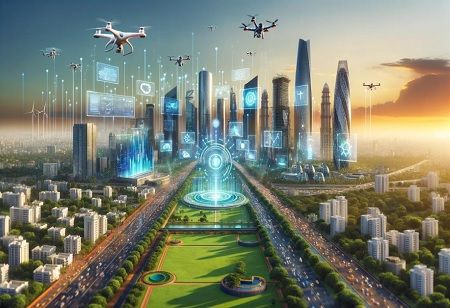
India’s vision of Viksit Bharat 2047 requires a massive expansion of its built environment, with 70–75 percent of required infrastructure yet to be constructed.
Simultaneously, 40–42 percent of India’s population is projected to live in urban areas by 2030, accelerating demand for housing, commercial real estate, and infrastructure.
Currently, buildings and construction contribute 25–33 percent of India’s national greenhouse gas (GHG) emissions, including both operational and embodied carbon emissions.
Key Highlights
As urban built space is expected to double or more in the coming decades, demand for cement and steel will rise sharply, increasing embodied emissions if not addressed.
Infrastructure already accounts for 30 percent of cement demand, alongside rural and urban housing. This underscores how today’s material and construction decisions will lock in emissions for decades.
Addressing embodied carbon is therefore a policy and market imperative. The proposed thematic session will examine decarbonisation across the value chain, from material extraction and manufacturing to transport and construction. Discussions will reflect India-specific regional variations (North, South, East, West) and typologies such as urban vs rural and residential vs commercial buildings.
Industry experts will explore opportunities and challenges in delivering a green and resilient built environment at scale by 2047.
Also Read: Viksit Bharat 2047 - India's Real estate enters a hyper-growth cycle
Key themes include integrating embodied carbon into design, regulation, procurement, and corporate climate targets, leveraging green public procurement, and evaluating mechanisms such as the Indian Carbon Market (CCTS) and Article 6 of the Paris Agreement to incentivize emissions reduction across the construction value chain.
We use cookies to ensure you get the best experience on our website. Read more...
Copyright © 2026 HomesIndiaMagazine. All Rights Reserved.
