

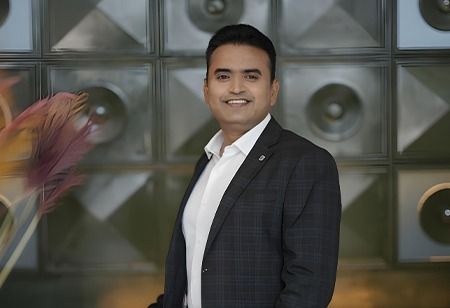
In an exclusive interaction with Adlin Pertishya Jebaraj, Correspondent at Homes India, Vijai Subramaniam, Chairman & Co-Founder of Royaloak Furniture, shares his insights on how the increasing demand for smart, space-efficient, and aesthetically driven interior solutions within India is largely influenced by evolving urban lifestyles and the reduction in living space.
Vijai Subramaniam, recognized as an experienced entrepreneur and a prominent figure in the industry, has a key role in the development of India's organized furniture retail sector. His profound understanding encompasses global sourcing strategies, consumer preferences, and the complexities of scalable retail operations.
How are changing urban lifestyles and smaller living spaces reshaping demand for integrated interior solutions in India?
Living in India, especially in Tier I cities, has changed dramatically, as residential areas are getting smaller. Meanwhile, the role of homes has grown beyond the conventional living to work-at-home arrangements and multi-purpose use.
This has made every square foot in a home of paramount importance. Space optimization and functional efficiency are now being considered by consumers as major factors and convertible and space- saving furniture are being increasingly demanded. An example is the introduction of sofas, which can be converted into beds, expandable dining tables that can be converted to six-seaters, and beds that can also be converted into workspaces, which are becoming very popular.
Additionally, with more time being spent indoors, customers are focusing on design aesthetics, durability, and superior finishing. A discernible change to superb interiors that are both functional and durable is observed. Generally, the demand for quality, innovativeness and functionality in furniture has increased enormously.
Also Read: Hyderabad Residential Real Estate Market Outlook & Trends
Why has execution predictability remained a persistent challenge despite advancements in design and visualization tools?
Although the industry has gone far in the approach of using the latest design tools like the use of AI tools and the use of 3D visualization, the aspect of execution has been a major bottleneck.
The major problem is in the disorganized and fractured character of the execution ecosystem. The customers usually procure materials and services from several sources- cement, steel, furniture, and interior components, which causes a lack of coordination.
Further, the interior and furniture industry remains dominated by small, disorganized players unlike in other industries where players pursuing corporate interests dominate the industry. This non-standardization and non-professional implementation structure leads to inconsistencies.
In spite of the fact that the accuracy of design has dramatically increased, the final product can still be aligned to customer expectations at 60-80 percent, mainly because of the gaps during execution. These difficulties are further compounded by the lack of guidelines on the organized execution and the lack of engagement of large organized players.
Can you elaborate on how integrated solutions across modular kitchens, wardrobes, and living spaces enhance customer experience?
Integrated interior solutions have made an enormous contribution to the customer experience in terms of providing a whole design and smooth functionality in various living areas.
Previously, the process of furniture design was mostly manual and depended on local carpenters and simple drawings. Modern-day customers can access highly developed visualization methods, such as 3D designs and AI-driven applications, to browse numerous design options before making a purchase.
As an example, the design of wardrobes has transitioned from traditional hinged doors to sliding and open wardrobe designs, which have been in line with the current aesthetics. Customers are able to compare different variations by color, material and layout.
Equally, kitchens, living rooms, and furniture can be placed in a virtual layout, with drag-and-drop interfaces to allow customers to see how each object fits into their space. Such a degree of pre-visualization guarantees the realization of almost 80 percent of the anticipated outcome in the process of execution, which contributes greatly to satisfaction and confidence in making decisions.
Also Read: Sohna's Rapid Growth Shapes Luxury Living Trends
How are digital tools such as 3D visualization, AI-based planning, or automation influencing the interiors value chain?
The combination of AI, 3D design tools, and automation has transformed the interior design process. In the past, planning was restricted to paper-based layouts and had little visualization abilities.
These technologies offer end-to-end visibility, from conceptualization to implementation, today. Information about elements, such as specifications, sourcing places, and installation, is readily available to customers and designers.
The innovation of the modern platform allows creating a complete ecosystem of a home, including furniture, decor, and kitchen details, which provides users with instructions on how and where to buy and install. This organized system has enhanced efficiency, accuracy, and transparency in the delivery of projects to a great extent.
On the whole, technology has turned interior design into a more data-oriented, accurate, and customer-focused process.
How do you balance affordability with durability and premium design in a price-sensitive market?
The combination of low costs and high reliability in a low-cost market demands a stance of sourcing and acquiring.
A successful model is to source furniture in specialized factories in different countries with each country specializing in a particular type of product. As an illustration, recliners can be produced in one factory, glass dining sets in another, wooden furniture in Southeast Asia and high quality leather goods in Europe or the United States.
Companies can save a lot of money through the use of bulk procurement strategies. Bulk orders- usually hundreds or thousands of items- allow the enterprise to gain greater negotiating power and cost advantages of up to 30% less than competitors.
These savings are transferred to the customers making quality items of premium quality accessible. Also, the quality of products will be better, and the durability will be better since the specialized manufacturers concentrate on their main competence.
How do you see the Indian interior market moving toward a fully organised ecosystem in the next 5-10 years?
The furniture and interior market in India is largely unorganized and organized retail has, at the moment, taken about 7% of the segment. In more advanced markets such as the United States, organized retail penetration is rather low, at approximately 15%.
Nonetheless, there is a gradual yet consistent growth in the organized retail sector in the Indian market, growing at a rate of 10-15 percent/year. The organized segment will achieve a market share of 15-20% in the next five years.
Although a completely organized ecosystem might not be possible in the short run, the transition to organized players is imminent. Customers are also looking to have a more structured and reliable solution than disorganized ones, as in the case of independent carpenters.
However, the limited presence of large corporate players continues to be a constraint. With the entry of more established companies in the market and the expansion of their operations, the industry is expected to experience a better standardization and performance practices and the customer experience is also likely to be improved.
We use cookies to ensure you get the best experience on our website. Read more...
Copyright © 2026 HomesIndiaMagazine. All Rights Reserved.
