

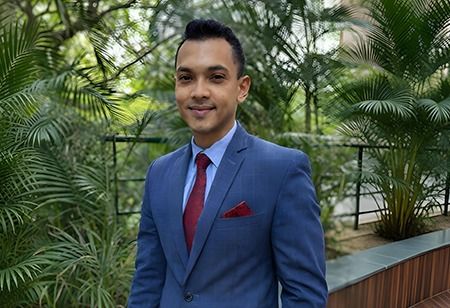
In an exclusive interview with Adlin Pertishya Jebaraj, Correspondent at Homes India, Saswata Mukhopadhyay, Assistant Vice President – Sales, Royal Orchid Hotels, points out fact that the MICE industry in India has become one of the key areas of hospitality development where the market size is expected to grow higher. He highlights the structural changes including demand by corporations, hybrid and tech-enabled events, and the emergence of tier-2 and experience-based destinations.
Saswata Mukhopadhyay is an experienced hotel and hospitality professional and has extensive knowledge in commercial strategy and revenue management of top hotel brands in India and South Asia. The leadership of Saswata speaks of its desire to enhance the guest experiences and improve the commercial performance of the company in vibrant hospitality markets.
Over the past decade, MICE (Meetings, Incentives, Conferences and Exhibitions) has developed into one of the most rapidly expanding sectors of the hospitality industry, compared to a marginal corporate travel segment. Currently, the Indian MICE market has been estimated to be worth USD 42.25 billion in 2026 and will increase to USD 74.12 billion by 2031 with an annual growth rate of approximately 11.9% CAGR.
Indeed, according to wider industry forecasts, the market is projected to be worth USD 100billion by 2030 due to surging corporate travel demand, infrastructure development and Government of India policy encouragement.
This demand is being characterized by several structural changes:
Corporate-led demand growth
The largest segment is the corporate clients, who constitute more than 52 of the MICE market. As India is emerging as one of the centres of global capability, IT services, pharmaceuticals, and manufacturing, business events have come to form the basis of business engagement plans.
Technology-driven and hybrid events
The pace of technology integration has increased exponentially after the pandemic. The use of event-tech platforms that facilitate hybrid conferences, digital networking, and AI-driven attendee interaction is expanding at an annual rate of more than 17 percentage points, which is indicative of the need to develop a flexible participation model.
MICE destination diversification in the region
Although the old attractions of Khajuraho, Varanasi and Bengaluru remain the most successful, there are new destinations that are on the rise with enhanced connectivity and new convention facilities, such as Varanasi and Khajuraho.
Domestic MICE dominance
The domestic corporate events contribute around 60 or 65 per cent of the total MICE market but the international events are increasing at a rapid pace with India becoming a global conference destination.
The development suggests that experience based events, which integrate business, networking, and leisure, have replaced business oriented travel which is commonly known as bleisure.
Also Read: Strategies for Building High-Performance Teams in International Hotels
To host big MICE events, traditional hotels that focused on rooms as the core operation of their hotel needs to evolve into an all-encompassing approach to event management.
Facility and infrastructure elasticity
Many modern conventions are routinely demanding huge, modular event rooms with the capacity to host 500-3,000 delegates, breakout rooms, and in-built exhibition space. Infrastructure that is convention ready is now a important distinguishing factor in the hotels that are competing in this segment.
Technology integration
Hotels are now required to accommodate high-level digital platforms such as hybrid meeting studios, high bandwidth, event applications, real time analytics, and interactive presentation systems. As event-tech services are projected to rise at a very high CAGR of over 16 per cent, technological preparedness is now a requirement.
Specialized sales and planning units
The big conventions need to coordinate many departments- sales, banquets, F&B, logistics and guest services. In a bid to provide smooth execution, hotels are increasingly implementing specialisation of their MICE sales teams and event planners.
Expandable F&B and logistics services
A major portion of the revenue of the event goes to food and beverages services. Actually, the F&B and venue rental share over 31 percent of the MICE market share, which can be regarded as the significance of banquet operations and culinary innovation.
All-encompassing destination experiences
The contemporary business practices have also incorporated team building exercises, local culture and post event recreation programs in the corporate events. Hotels are forced to liaise with destination management companies to provide complete experiences.
Luxury and heritage hotels have a special opportunity to capitalize on MICE tourism by providing experience in venues providing a combination of business and culture, exclusivity and destination attractions.
Corporate events, which are experience-based
Considering destination-based meetings and incentive trips is becoming very popular with many corporations in the world. Heritage palaces, beachfront resorts and luxury houses in the hills offer a unique ambiance worth adding to brand perception and attendee interaction.
Leadership retreats and destination incentives
Incentive travel is one of the most rapidly expanding MICE segments and it is likely to increase by approximately 12.85 per cent CAGR till the year 2031. Such events can best be conducted in luxury resorts and heritage properties since they have business infrastructure as well as luxurious leisure facilities.
Combination with weddings and social activities
The story in India is that luxury hotels have been able to integrate destination weddings with corporate events to generate revenue throughout the year. This multi-segment strategy enhances the occupancy and also boosts revenue per available room (RevPAR).
Exclusive positioning of the brand
In the case of luxury and heritage hotels, international conferences or leadership summits that involve high profile guests can be a major boost to the prestige and exposure of the brand in the international arena.
Also Read: Beyond Metros: Redefining Hospitality Performance
The concept of sustainability has emerged as one of the key decision-making factors in the international MICE ecosystem. Most multinational organizations currently possess ESG obligations where events must meet sustainability standards.
The major sustainability expectations involve:
Green-certified venues
Event organisers are increasingly choosing hotels that are LEED certified, have energy-efficient systems and are also responsible in their water management practices.
Low-carbon event design
Business organisations are focusing on events which minimise environmental implications by using renewable energy, waste management initiatives, and procurement sustainability.
Catering and supply chains Responsible catering and supply chains. Environmentally friendly sourcing of food, minimized food waste, and locally sourced food are turning out to be a prerequisite to international events.
Digital: Digital engagement within the education sector. Hybrid: Hybrid engagement in the education sector. Hybrid conferences will decrease the carbon footprint of international travel with a significant increase in participation. Such sustainability concerns are slowly turning hotels into responsible event ecosystems, as opposed to venues.
The sector of MICE in India is set to be transformed greatly in the coming decade.
Global positioning and market expansion
The industry is estimated to expand by double digit by the early 2030s and maybe USD 70-100 billion making India one of the fastest expanding international MICE markets worldwide.
Infrastructure-led growth
Large convention spaces are historically short in India and the large convention centers like the India international convention and expo centre ( yashobhoomi ) and other massive convention centres are compensating the long-standing shortages of large convention spaces.
Emergence of tier-2 destinations and experience-oriented destinations and some other emerging cultural destinations such as Jaipur, Kochi, Varanasi and others are increasingly hosting conferences and exhibitions due to the better connectivity and tourism infrastructure.
Government policy support
Programs like meet in India program and fast track e-conference visa are enhancing accessibility to international delegates and are also making India a viable destination of global events.
Amalgamation of business vacations and leisure tourism
The subsequent point of development will be that of integration of business activities with experiential tourism where conferences are augmented by cultural immersion, wellness programmes, and on-the-job experiences.
Hospitality-wise, MICE tourism will remain an essential income source to the hotels, enhancing their occupancy rates, increasing the rates of banquet, and building up the destination branding.
We use cookies to ensure you get the best experience on our website. Read more...
Copyright © 2026 HomesIndiaMagazine. All Rights Reserved.
