

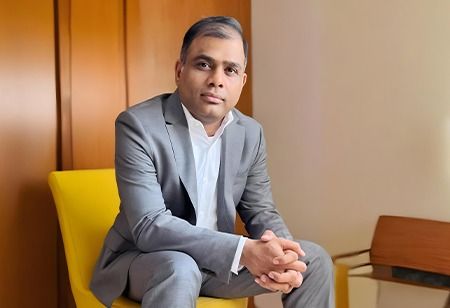
In an exclusive interaction with Adlin Pertishya Jebaraj, Correspondent at Homes India Magazine, Vikram Singh Chauhan, Founder & CEO at Nile Hospitality, highlights how the hospitality industry in India is being redefined by the burgeoning of Tier II and III cities as sustainable performance-based markets. He points out that sustainability and energy efficiency have ceased being an option but part of long-term value creation and responsible growth.
Chauhan has extensive experience in branded, independent, and conversion-led asset strategies, supported by an extensive knowledge of market dynamics, business excellence, and scalable business models.
With India’s hospitality sector expanding beyond Tier I cities, how are emerging markets reshaping growth strategies for branded, independent, and conversion-led hotels?
India’s hospitality growth is increasingly driven by Tier II and Tier III cities, supported by better infrastructure, connectivity, and rising travel demand. From vantage point, for branded hotels, these markets offer exciting growth opportunities with frameworks that can be adopted to replicate with attention to regional nuances.
For branded hotels, these markets offer lower development costs and faster ramp-up, where success depends on operational efficiency and strong local understanding. Global brands are increasingly open to flexible brand standards and market-led formats, making these cities ideal for franchise-led growth. Success here depends less on brand visibility alone and more on operational discipline, cost efficiency, and local demand understanding. Independent hotels are also evolving. Owners are now more receptive to professional management as they recognize the value of structured operations, revenue optimization, and stronger distribution. In these markets, performance comes from balancing brand-level systems with localized service.
Conversion-led hotels represent one of the most compelling opportunities in these emerging markets. Overall, growth strategies are shifting from expansion for scale to expansion driven by sustainable performance, asset optimization, and market-specific execution.
Also Read: Social Space Activation Ideas for Future-Ready Residences
In emerging hospitality markets, what are the key operational challenges, talent availability, supply chain constraints, or demand volatility and how do you address them?
These challenges relate to all markets. Best talent relocation, sustainable business distribution, dependable connectivity and logistics are all part. We have been able to build capacities to handle some of these challenges effectively; and being part our larger and established eco system with our historical strength provide timely support for newer properties to gain their space. Tier II and Tier III cities often have a limited pool of trained professionals, which is addressed through local hiring, structured training, and deploying experienced leaders from established markets to build operational capability and service standards.
For instance, at NILE Hospitality, the challenges has been address through a strong focus on local hiring supported by structured training, cross-property mobility, and leadership deployment from mature markets to build on-ground capability and culture. Supply chain limitations are managed through centralized procurement, regional sourcing, and strong vendor partnerships to ensure quality and cost efficiency. Demand volatility, driven by seasonality or limited corporate presence, is addressed through flexible operating models, right-sized teams, and dynamic pricing aligned with local demand such as social functions, religious travel, and government business.
Performance in these markets depends on aligning global operational standards with local realities, backed by data-driven insights and deep market understanding, to deliver sustainable performance and long-term value.
Your portfolio spans branded, independent, and conversion-led hotels. How do you determine the right model for each asset to maximize value creation?
Focusing on building multiple strengths including, location, brand, people and service touch points aligned with the cultural DNA of that specific market. Since 2018, these elements have been integral and as a footprint across the country grew, this allows to fine tune these points. Selecting the right model branded, independent, or conversion-led begins with a detailed evaluation of the asset’s micro-market, demand drivers, competitive landscape, and the owner’s long-term objectives.
In emerging Tier II and Tier III cities, where brand recognition influences demand and financing, a global brand can accelerate market entry, strengthen distribution; destinations with strong leisure appeal or cultural identity may benefit from an independent or soft-brand approach, allowing greater flexibility in positioning, design, and guest experience.
Conversion-led opportunities are assessed through the lens of unlocking value in underperforming yet well-located assets. The model is chosen by aligning market potential with ownership goals to ensure sustainable, long-term performance.
Also Read: Why India's Youth Travel Market is Reshaping Hospitality
With rising guest expectations, how are sustainability and energy efficiency being integrated into hotel operations and development strategies?
The goal is to arrive and operate at a vital intersection where realistic objectives, progress and capabilities are aligned with our purpose to build a company that has a positive impact on people and our planet.
Hospitality sector needs to committed to strengthening the resilience in the communities that serves, creating opportunities through jobs, sourcing and enhancing sustainability in both seeking to conserve resources and collaboratively encouraging the guests and teams to make everyday choices. Sustainability and energy efficiency are now integral to hotel development and operations, driven by both rising guest expectations and the need for long-term cost efficiency. At the development stage, this includes energy-efficient building systems, optimized natural lighting, climate-responsive design, and better insulation to reduce energy consumption while enhancing guest comfort.
Operationally, hotels are adopting energy management systems, smart HVAC controls, LED lighting, and water-saving fixtures to improve efficiency without compromising experience. Waste reduction practices, linen reuse programs, and responsible sourcing are also becoming standard. Aligning with local ecosystem through local hiring and regional sourcing, which reduces environmental impact while strengthening community connection.
Looking ahead, how do you see India’s hospitality landscape evolving over the next five to ten years, particularly in secondary and tertiary cities?
Apart from the geographical expansion and growth across tiers, I believe the hospitality industry will be able to provide the guests more choices based on personalization. This would include a line up of brands, services, experiences and digital offerings.
I believe discretionary spending and choices will define and generate regional hubs and non- metro transformation as far as hospitality markets are concerned. Reinvestment in technology initiatives, both to improve guest experience and operational excellence as both our customers and us, service providers get more curious and better at agility. Improved infrastructure, airport connectivity, and regional development are reshaping travel patterns, turning former transit and pilgrimage destinations into strong markets for business, leisure, weddings, and long-stay demand.
Guest expectations in these cities are also evolving. Travellers now seek branded experiences, consistent service, and strong F&B offerings, creating opportunities for conversions, rebranding, and asset repositioning alongside new developments. With rising metro congestion and costs, secondary cities will also become key hubs for social and MICE demand. Over the next decade, these markets will move from “emerging” to core growth engines driving resilient, long-term performance.
We use cookies to ensure you get the best experience on our website. Read more...
Copyright © 2026 HomesIndiaMagazine. All Rights Reserved.
