

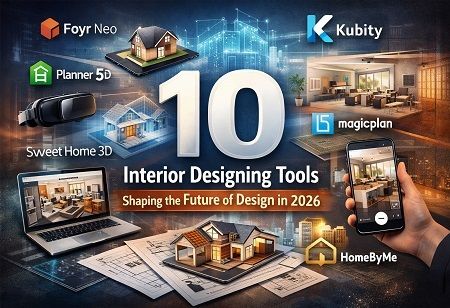
Interior designers, students, and studio owners are always asking: What are the best tools for modern interior design? In a field where creativity meets technology, using the right interior design tools can make work faster, clearer, and more impactful.
Today’s design world uses digital platforms more than ever before. Designers no longer sketch only on paper.
They rely on interior design software to plan spaces, create floor plans, and show clients exactly what their designs will look like.
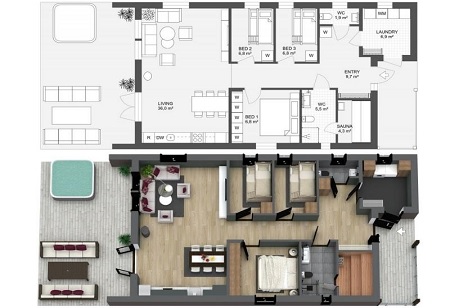
Company: RoomSketcher AS Type: Floor planning and interior design software
RoomSketcher is a robust interior design tool that helps designers produce professional-grade floor plans and realistic visualizations quickly. It’s well suited to residential and commercial projects where clear layouts and presentations are essential. Designers, freelancers, and studio heads use it to draw accurate 2D floor plans and transform them into interactive 3D views that communicate design intent effectively.
One of RoomSketcher’s key strengths is how easy it makes creating architectural floor plans that are both accurate and visually engaging. You can draft plans from scratch, trace a blueprint image, or even use mobile scan features to digitally capture an existing space and convert it into editable plans. Once the base layout is ready, RoomSketcher generates high-quality 3D photos, Live 3D walkthroughs, and 360° panoramic views that help clients and team members see the space from every angle.
The software supports precise measurements, customizable materials, and furniture libraries, allowing you to define spaces with real dimensions and finishes. You can also brand your layouts with company logos and color themes, making it ideal for portfolios and client deliverables. RoomSketcher saves your projects in the cloud so you can work from tablets, desktops, or laptops, and easily sync changes across devices.
Professionals value RoomSketcher because it reduces the time needed to generate polished design visuals. It also supports both 2D and 3D planning, enabling seamless transitions between basic planning and high-impact presentations. This makes it a versatile tool for interior designers, architects, or real estate professionals who need to convey space and design clearly to various stakeholders.
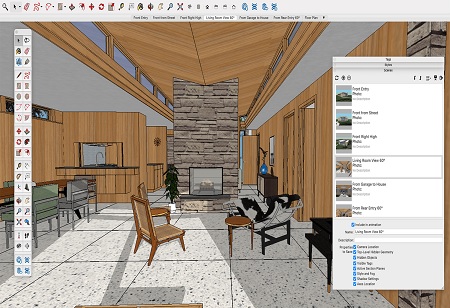
Company: Trimble Inc. Type: 3D modeling software
SketchUp is one of the most widely recognized interior design tools for creating detailed 3D models of spaces, furniture, and architectural features. Originally developed for general 3D modeling, it has evolved into a trusted platform for interior designers and architects due to its intuitive interface and versatile modeling capabilities.
At its core, SketchUp lets designers build complex interior environments by drawing shapes, extruding forms, and adjusting space in three dimensions. Unlike tools that focus on presets, SketchUp empowers you to create custom geometry and exact spatial designs based on your ideas — so you’re not limited to predefined room templates. Its 3D Warehouse is a powerful asset library offering millions of user-generated components, from chairs and tables to full furniture sets and fixtures, which you can import directly into your models.
SketchUp also supports extensions and plugins, allowing designers to integrate advanced features such as photorealistic rendering with tools like V-Ray, energy analysis, or collaborative cloud workflows. These extensions help you refine lighting, materials, and texture, making final visuals more realistic for client presentations.
Professionals value SketchUp for its flexibility, precision, and creative control. Designers can easily move from conceptual sketches to highly detailed interiors ready for documentation, material selection, and even construction planning. Its familiarity and widespread use also make it easy to collaborate with architects, builders, and other stakeholders across projects of varying complexity.
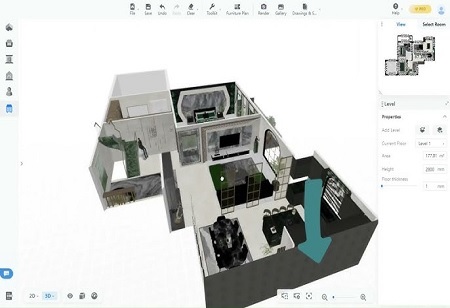
Company: Coohom Type: Interior design visualization and rendering platform
Coohom is a powerful design platform focused on delivering high-fidelity visualization and rendering capabilities for interior designers and architects. It combines intuitive layout tools with advanced rendering engines, enabling users to produce near-photorealistic images and walkthroughs that help clients visualize spaces before any physical changes are made. While not a traditional interior design software for technical drafting, its strength lies in creating compelling visual content that supports design decisions and client communication.
With Coohom, designers can start by uploading a 2D floor plan or using drag-and-drop tools to lay out rooms and furnishings. The platform includes an extensive 3D object and decor library with configurable materials, finishes, and lighting tools. As you build the space, Coohom’s engine allows you to render high-resolution stills, animated walkthroughs, and VR experiences, giving clients a clear sense of scale, lighting, and material quality.
Because it focuses on visualization, Coohom also integrates with other design tools. For example, you can import models from platforms like SketchUp or Revit and use Coohom’s rendering suite to enhance them with professional-grade materials and lighting effects. This makes it an excellent companion for designers who want to combine precise modeling with stunning visual outputs.
Design studios often choose Coohom when they need presentations that stand out — especially in competitive pitches or client reviews where photorealistic quality can influence decisions. Its balance of power and ease of use makes it suitable for both seasoned pros and design teams looking to streamline visualization workflows.
Also Read: Top 15 Proptech Founders to Watch in India for 2026
From intuitive beginners’ tools to professional-grade software, these interior designing tools are shaping the future of how spaces are conceived and delivered. Each tool brings something unique — whether it’s AI interior design tools for faster results, AR tech for real-world planning, or visualization tools that help clients see their dreams before they become reality.
Understanding how technology is changing interior designing helps you stay ahead in a competitive field. By exploring these platforms, you’ll know future interior design solutions professionals use to work smarter, present better, and design with confidence.
We use cookies to ensure you get the best experience on our website. Read more...
Copyright © 2026 HomesIndiaMagazine. All Rights Reserved.
