

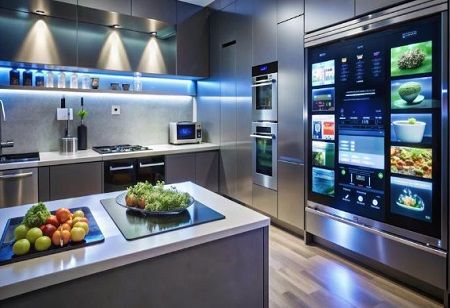
The kitchen electronics business is experiencing a high rate of growth due to the desire to have smarter, more efficient and connected appliances. The first and most prominent are AI-based gadgets, which can provide such features as alternative recipes, automated cooking applications, and remote tracking.
Appliances that can adjust themselves to the preferences and time schedule of the consumers are becoming more in demand. Voice assistants, like Amazon Alexa and Google Assistant, have facilitated the possibility of uninterrupted control of various devices that currently make an order in an oven to preheat or check the content of a fridge without using your hands among other applications.
Other major trends are energy efficiency and sustainability. The manufacturers are concentrating on low-energy appliances, green refrigerants and appliances that produce less food waste. The emergence of health-sensitive consumers has only increased the pace at which the appliances that can monitor the nutritional value or help in controlling the portion size are sought.
According to credible market reports, smart kitchen electronics will experience over 12 percent CAGR in the world market between 2024 and 2028, which is an indication of a high demand for innovation in this field.
Smart Ovens and Sensors 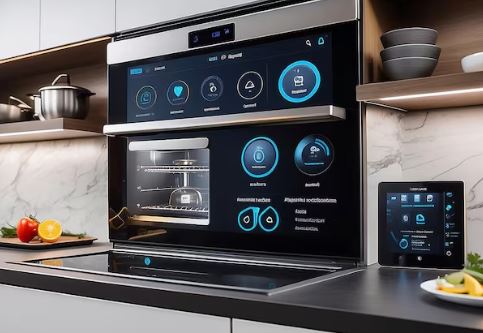
Today, the kitchen is being remodeled at a faster rate than ever before by technological innovation. The integration of AI will enable the appliances to identify user behaviors, calculation of cooking time, and real-time instructions.
As an example, intelligent ovens are able to change temperature and cooking time depending on the kind and amount of food, so that every time a user puts food in the oven, it will turn out the same. The sensors check on the humidity, temperature and the freshness of the ingredients, warning users of the possibility of spoilage, and minimizing wastage.
The kitchen is also getting integrated with robotics with automated cook appliances that can perform such fine duties as chopping, stirring, or even serving food. Mobile applications can now be connected to many appliances to allow users to plan their meals, manage their grocery stocks, and control appliances even when they are not present.
The combination of AI, IoT, and robotics not only makes life more convenient but also turns the kitchen into a smart, data-driven space, which can be customized to meet the unique lifestyle of every user.
“We are leveraging AI and IoT to create smarter, more intuitive home appliances that enhance user convenience and optimize energy consumption.” - Sanjeev Agrawal, VP – Group CTO, Blue Star Limited.
Challenges in Adoption
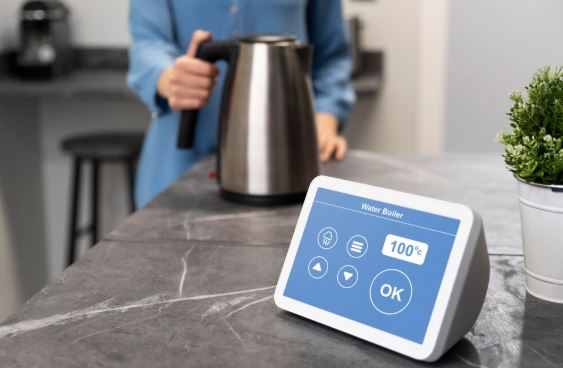 In spite of the fast development, there are still a number of challenges concerning the implementation of smart kitchen electronics. High initial expenditure may discourage modernization by consumers, especially in developing countries. The interoperability among gadgets across brands is still a challenge, and in most instances, users are forced to spend money on a single platform. Another issue is the issue of cyber security, since the appliances that are connected are prone to hacking and data breaches.
Education of consumers is essential to close the technological divide in the use of AI-enabled devices. It is not only necessary that the users learn not only how to operate the technology, but also how to enjoy the advantages of the technology safely and efficiently. Other factors include durability and long-term maintenance, especially for appliances that have robotics embedded in or are highly sensor-enabled.
“Despite Indians spending 2–3 hours daily in their kitchens, these spaces have seen minimal technological advancement. Smart technology now has the power to make cooking more efficient, safe, and intuitive for every household.” - Eshwar K. Vikas, Co-Founder & CEO, Beyond Appliances
Multifunctional Smart Kitchens 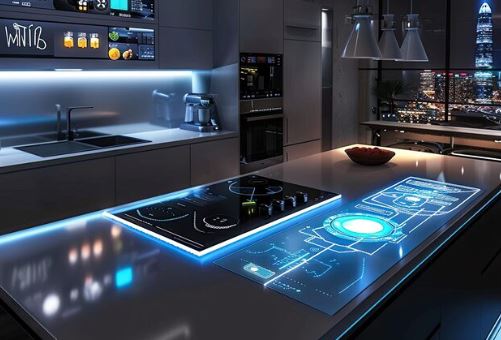
The development of kitchen electronics is radically changing the way people cook, feed and live as a whole. The smart appliances are time-saving, work less, and give instructions that would promote better cooking. Predictive and adaptive AI capabilities enable users to plan meals, monitor food-related objectives, and reduce waste, as well as experience an individual culinary experience.
The kitchen is also turning out to be a multifunctional place, where people can have fun, communicate and get stuff done. Combined voice recognition, television screens, and appliances enable homeowners to do jobs simultaneously such as cooking instructions, managing the smart home, or video-calling friends without having to step out of the kitchen.
“The goal is to make every device in Indian homes work together intelligently, creating connected ecosystems that simplify daily life and enhance convenience.” - Ghufran Alam, Vice President & Head of Digital Appliances, Samsung India
Also Read: 10 Interior Designing Tools Shaping the Future of Design in 2026
Future of Smart Kitchens
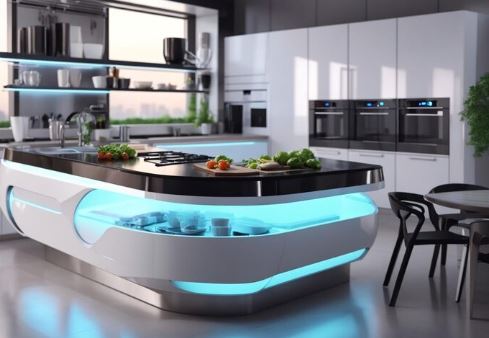 The kitchen infrastructure in 2026 will also be an even more transformative place. Robotic chefs controlled by AI will handle the more complicated cooking processes, and augmented reality (AR) can also offer a guideline on cooking. Robotically controlled, fully automated kitchens would be able to prepare meals to the final stage, and this creates the highest level of convenience ever.
“Indian homes are evolving rapidly, and homeowners now expect intelligent, energy-efficient kitchen appliances that deliver both performance and design to elevate everyday cooking experiences.” - Mahesh Kumar Choudhary, President, Hindware Home Innovation Limited
Sustainability will be at the core and the appliances will be made to save on energy usage and lessen food waste. Predictive and self-learning technologies will allow appliances to be able to predict the needs of a user and optimize the use of energy and become a part and parcel of the smart homes. It is predicted that these improvements will transform the intelligent kitchen toward being more Eco-friendly and resource-efficient.
Conclusion
The evolution of kitchen electronics is an indication of the wider trend towards connected, intelligent and sustainable living environments. Kitchen appliances have been used modestly as basic cooking tools, to the current applications of AI-controlled, sensor-based systems that are entirely transforming the way we cook, eat, and engage with our homes.
By the year 2026 and beyond, consumers will have the benefit of smarter, safer and efficient kitchen experiences which will add better lifestyle, convenience and health to the kitchen and thus the modern kitchen will be the center of a truly intelligent home.
We use cookies to ensure you get the best experience on our website. Read more...
Copyright © 2026 HomesIndiaMagazine. All Rights Reserved.
