

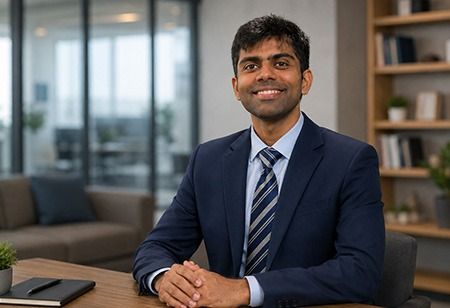
For decades, success was signalled through real estate. A tower with your name on it, a corner office with a skyline view, a parking lot full of company cars - that equation is breaking down. Today's founders and creative teams aren't chasing square footage or status. They are optimizing for focus, flow, and proximity to the rest of their lives - and they are making workspace decisions that reflect a fundamentally different theory of how good work actually gets done.
This shift is not sentimental. It is rational. And the data increasingly backs the instinct.
India has one of the worst commute problems in the world, and it is getting worse. Bengaluru's workforce now spends an average of 50 minutes travelling roughly 15 km one-way. Nationally, Indians spend about 7% of their day commuting, more than two hours on the road. Bengaluru's average traffic speed is a crawling 18.7 km/h, the second slowest in the country.
For founders, the arithmetic is simple: a location ten minutes from where your team lives is not a perk. It is a recovered hour a day per person. Across a 10-person team, that is 10 hours of productive capacity returned to the business every single working day - more than a full person-day - without hiring anyone or changing any process. That is not a workspace decision. It is a capital allocation decision.
This is why 73% of Indian occupiers now cite proximity to talent as the primary reason they are moving toward flexible leases, rather than locking into one distant campus. And it is why, even through the period when remote and hybrid work hollowed out office-dominated downtowns globally, walkable urban neighbourhoods kept growing. The commute cost finally became visible - and founders stopped absorbing it on behalf of their teams.
There is a second-order effect that is less discussed. India's burnout numbers are among the highest in any major economy. A 2025 survey by Indeed India found that 72% of Indian employees report feeling burned out at some point in their current role - a figure that has risen 14 percentage points since 2022, the steepest increase recorded in any major economy in the same period. The Cigna 360 Well-Being Survey India found that 89% of Indian respondents report feeling stressed, compared to a global average of 84%. South Asia records the longest average work hours in the world at 49 hours per week.
Commute is not the only driver of burnout. But it is one of the few structural contributors that a workspace location decision can directly address. A founder who eliminates 90 minutes of daily commuting from her team's life is not just giving them back time. She is removing a chronic low-level stressor that compounds across months into measurable mental health and retention consequences. The workspace location decision and the mental health strategy are, increasingly, the same decision.
Creative output does not scale with hours worked. It depends on protected blocks of uninterrupted attention - what cognitive scientists call deep work - and almost nothing destroys those blocks faster than operational logistics. A broken thermostat. A printer ticket. A building-management email chain. Each is individually trivial. Collectively, they enforce a tax on cognitive output that compounds invisibly across the workday.
Also read: How Goregaon East is emerging as Mumbai's Next Business Hub
The neuroscience behind this is clear. Every time attention is pulled from a complex task, the brain requires approximately 23 minutes to return to full concentration depth. A founder fielding four operational interruptions in a morning has not lost 10 minutes. She has likely lost the entire morning's deep work window. The workspace that eliminates those interruptions is not providing a convenience. It is protecting the conditions under which the most valuable work in a startup actually gets done.
This is also why Indian founders increasingly favour opex-based flex space over capex-heavy long leases. A traditional office lease in Bengaluru requires a security deposit that can exceed Rs 5 lakh, a multi-year commitment, and months of setup time before a single product decision gets made. Flex space costs Rs 3,000 - 8,000 per seat per month with no deposit, no fit-out project, and no lease renegotiation when a funding round triggers a hiring spree. The workspace scales without becoming its own management problem - which is the only thing that matters to a founder whose attention budget is already fully committed to the business.
The market numbers reflect this preference at scale. India's flexible workspace market has crossed USD 4.53 billion in 2026 and is projected to reach USD 8.7 billion by 2031, growing at nearly 14% annually. Total flexible workspace stock has tripled between 2020 and 2025, reaching 110 - 114 million square feet. 65% of Indian firms plan to add flexible workspaces by 2027. This is not a niche preference anymore. It is the direction the entire market is moving - and the founders who moved early simply saw the logic before the data confirmed it.
The flip side of less hassle is automation that nobody has to manage. Booking a meeting room should not require an email to a building manager. The air conditioning should not need a thermostat negotiation. Maintenance should happen before anyone notices something is wrong. None of this is glamorous - it is the opposite of the smart-building demo reel - but it is the difference between a space that serves you and one that requires a part-time administrator to run.
The best managed workspace operators have understood this for years. The healthiest numbers in the flex segment belong to operators who have nailed seamless, self-service operations - not the ones with the most impressive lobbies. Meeting room searches on workspace platforms have risen 187% over the past three years. That data point tells you something important: the product that founders most want from a managed workspace is not the desk or the coffee. It is the friction-free meeting infrastructure that makes collaboration happen without coordination overhead.
There is also a data dimension to automation that is becoming commercially significant. The best-managed flex operators are now generating real-time occupancy data, energy consumption insights, and space utilisation analytics that GCC tenants use for their own Scope 2 ESG reporting. Automation is no longer just operational efficiency. It is becoming a compliance product - and the workspace operators who built the infrastructure for seamless self-service are now the same operators whose buildings satisfy a multinational tenant's environmental data requirements. These two things were never designed to be connected. They converged naturally when the operators got the basics right.
A statistic that deserves more attention than it typically receives: 73% of tech founders globally report a hidden mental health crisis, with most experiencing persistent exhaustion for three months or longer while continuing to perform externally, according to a 2025 CEREVITY study. In India specifically, 59% of employees show clinical burnout symptoms. The pattern the research identifies is called shadow burnout: founders closing funding rounds, shipping products, hitting targets, and looking fine - while their internal systems are progressively failing.
The workspace is not the primary cause of founder burnout, and no office design will cure a fundamentally unsustainable operating pace. But the physical environment is a genuine modulator of the conditions that either accelerate or buffer against burnout. Companies that prioritise employee wellbeing through workspace environment see a 67% boost in performance and are 21% more productive, according to research published in 2026. The mechanism is not mysterious: environments that reduce ambient stress allow people to operate for longer without hitting the cognitive and emotional limits that produce burnout. The workspace is not the solution. But it is part of the operating system that determines how much cognitive load founders can sustainably carry.
The sterile glass-and-steel office is losing the argument - and not just on aesthetics. Founders now gravitate toward spaces that feel like a creative studio, a café, or a living room. The Human Spaces study found employees in greener, naturally-lit environments are 6% more productive, 15% more creative, and report 15% higher wellbeing. A 2025 Indian Institute of Human Settlements study found that integrating natural elements into offices improved employee mental wellbeing by up to 21% and cut workplace stress by 34%.
In India, this is not borrowed from the West. It is closer to a return to an older instinct about how people work well - connected to natural light, to living things, to spaces that feel inhabited rather than occupied. The data confirms what Indian office designers working from intuition have long suspected: organic materials, warm palettes, plants, and ventilation are not decorative choices. They are physiological interventions.
53% of Indian employees say they are worried about indoor air pollution. That statistic reframes the entire biophilic design conversation. Greenery and ventilation in Indian workplaces are not aesthetic preferences layered on top of productivity. They are answers to a named, specific concern that a significant majority of the workforce carries with them into every office they walk into. The workspace that addresses it is not providing a luxury. It is resolving an anxiety.
Comfort is not a luxury layered on top of productivity. For creative founders and their teams, it is the precondition for it. People do their best thinking when they are not bracing against their environment - when the room is not fighting them for attention they need for the problem they came in to solve. The workspace that earns cognitive peace is the one that gets used. The workspace that demands management overhead, assaults the senses, or simply feels wrong is the one that drives founders back to their kitchen tables and their favourite café corners.
Also read: SCO Projects: The Future of Commercial Spaces in Indian Real Estate
This recalibration is happening at startup speed. The old model optimised for who got the corner office. The new one optimises for what actually predicts good work: a short commute, an operator who handles the building so the founder does not have to, and a room that does not fight the people in it.
The market is already voting. India's flex workspace absorption is growing at 30% compounded annually. Meeting room demand has nearly tripled in three years. Coworking searches now outnumber traditional leasing searches five to one. Tier II cities, long assumed to be secondary considerations for workspace quality, now account for 28% of total flexible workspace absorption because founders there have made the same calculations as their metro counterparts, and arrived at the same conclusions.
What is striking about this transition is how consistent the underlying logic is across company sizes and stages. A 4-person founding team in Koramangala and a 400-person GCC division in Whitefield are making structurally similar decisions: reduce operational overhead, prioritise proximity to talent, create environments that support the kind of work the team actually needs to do. The workspace has gone from a status signal to a productivity instrument - and the best founders recognised that shift before the industry did.
The opportunity for workspace operators is not simply to build nicer offices. It is to understand what the new model is optimising for and build infrastructure around that. The founders building India's next wave of companies have already told us what they want. A short commute. Seamless operations they never have to think about. A room that breathes. A lease that scales. And an environment where the conditions for their best work are protected, not competed for. The opportunity is building it for them.
Aashit Verma is the Founder of Hanto Workspace. He represents a new generation of entrepreneurs grounded in India’s growth story but inspired by global design, technology, and purpose.
Beyond his entrepreneurial ventures, Aashit has held pivotal roles in reputed organizations. As Category Head at ClearTax India, he played a crucial role in addressing key challenges in product adoption, driving user engagement, and accelerating business growth.
We use cookies to ensure you get the best experience on our website. Read more...
Copyright © 2026 HomesIndiaMagazine. All Rights Reserved.
