

India's National Capital Region (NCR) one of the country’s most influential real estate markets is transitioning into a more mature and resilient residential market. This development arises out of genuine end-user demand, infrastructure-led development and changing consumer aspirations. The post-pandemic period has reinforced housing as a strategic asset rather than merely a consumption expense. At the same time, regulatory reforms, maturing real estate ecosystem and enhanced buyer confidence have collectively laid the foundation for a healthier and more sustainable residential market. All these developments when taken as a whole make NCR one of India's most compelling long-term investment destinations.
A defining characteristic of the NCR housing market is the broad-based nature of demand. Every year, thousands of professionals, entrepreneurs, students and skilled workers relocate to NCR in search of employment and better educational opportunities. This continuous influx results in steady demand across different housing segments, ranging from affordable apartments to premium residences and luxury developments.
A significant trend shaping the market today is the evolution of buyer profiles. With rising income, there has been a noticeable increase in demand from second-home. Non-resident Indians (NRIs), high-net-worth individuals and investors seeking long-term capital appreciation too have also continued favouring the NCR housing market. Moreover, higher-income households are increasingly seeking larger residences that offer greater privacy, wellness-oriented amenities and integrated community living.
Another important factor behind NCR's transformation is infrastructure development. Across the region, transportation networks, expressways, metro connectivity, airports and urban mobility are being developed. These infrastructure developments are fundamentally reshaping the geography of housing demand as they create avenues for future residential growth. The Dwarka Expressway, Delhi-Mumbai Expressway and International Airport at Jewar have not only boosted property values, they have also created news jobs in logistics, hospitality and industrial expansion.
Also Read: How Lifestyle Amenities are redefining Residential Living in NCR
Major infrastructure expansion has contributed significantly to the emergence of new residential micro-markets across the NCR. Locations that were once on the periphery are now being mainstreamed, transforming into planned urban centres supported by improving connectivity, commercial development and social infrastructure. As employment hubs expand beyond traditional business districts, these emerging corridors are attracting both end-users and investors seeking relatively affordable entry points with long-term appreciation potential. The expansion of viable residential pockets across the region has effectively reduced the pressure on established locations that have begun to stagnate.
Another noteworthy trend is that purchasing decisions increasingly extend beyond location and pricing to include lifestyle, sustainability, developer reputation and future liveability. Buyers are increasingly prioritising larger layouts, dedicated workspaces, improved ventilation, open green areas and wellness-focused amenities. Integrated townships offering schools, healthcare facilities, retail centres, recreational infrastructure and community spaces have consequently gained greater acceptance among homebuyers seeking convenience and quality of life.
There is a growing emphasis on trust and transparency that is transforming the real estate sector. Regulatory reforms have significantly strengthened buyer confidence by promoting greater accountability and improving project governance. Homebuyers today place considerable importance on a developer's execution capabilities, delivery track record, financial strength and commitment to quality. This shift has encouraged healthier competition across the industry while contributing to greater overall market stability.
Access to financing has also become more accessible to support sustained demand for housing and social infrastructure. Banks and housing finance companies are competing to attract eligible buyers of quality developments. At the same time, rising financial awareness has encouraged purchasers to evaluate affordability, repayment capacity and long-term asset value more carefully before making investment decisions. This combination of prudent lending practices and increasingly informed buyers has contributed to a healthier market environment characterised by greater financial discipline and lower speculative activity.
Taken together, these evolving demand and trends indicate that NCR's residential market is entering a more mature phase of development. Rather than being driven primarily by cyclical momentum, the market is increasingly supported by structural developments that are likely to shape residential growth for years to come.
NCR's long-term investment potential is supported by four major factors economic growth, infrastructure expansion, demographic demand and a maturing real estate ecosystem. While short-term market cycles are inevitable, the region's sustained economic growth makes it ideal for investors with a medium- to long-term horizon. Unlike speculative markets that rely primarily on sentiment, NCR's residential sector is increasingly underpinned by tangible drivers such as employment generation, expanding business districts, improved connectivity and a growing population.
One of the strongest indicators of long-term investment potential is a diversified economic base. NCR is home to a wide spectrum of industries, including information technology, financial services, manufacturing, consulting, healthcare, education, retail, logistics and emerging technology sectors. This diversity provides resilience against sector-specific slowdowns while ensuring a steady inflow of professionals seeking quality housing. As commercial activity expands across established business districts and new economic clusters emerge, residential demand naturally follows, creating a mutually reinforcing cycle between employment growth and housing absorption. The continued expansion of employment corridors across Gurugram, Noida, Greater Noida and adjoining regions is therefore likely to remain a significant catalyst for growth.
Also Read: Gurgaon Shaping the Future of Luxury Real Estate for Homebuyers
Another important factor that is strengthening the investment outlook is the improvement in the quality of residential supply. Developers today are placing greater emphasis on integrating design, construction quality, amenities, sustainability and community planning. Such projects not only improve the quality of life for residents but also contribute to stronger long-term asset performance by creating self-sustaining neighbourhoods with enduring appeal.
Real estate is inherently a long-term asset class and a balanced investment approach remains essential. A disciplined investment strategy supported by thorough due diligence, realistic expectations and a long-term perspective is more likely to generate sustainable returns. The NCR residential market is well positioned to benefit from India's continuing urbanisation, economic expansion and infrastructure transformation.
Looking ahead, the evolution of the NCR residential market is likely to remain closely aligned with the growth and expansion of infrastructure development. Continued investments in transport infrastructure, digital connectivity and industrial expansion are expected to strengthen the region's attractiveness for both businesses and home buyers. With the increasing focus on integrated development and improved quality of life, residential real estate is likely to benefit from sustained demand supported by long-term structural fundamentals rather than short-lived market sentiment.
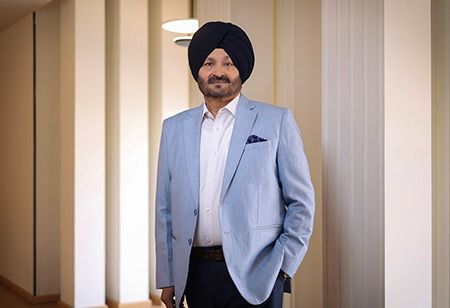
CJ Singh is the Chief Operating Officer of Wave City, a flagship development under The Wave Group - one of India’s foremost business conglomerates. With over 15 years of experience in real estate, he has been pivotal in guiding Wave City’s strategic vision and operational excellence, helping it evolve into a thriving urban township. An alumnus of University Business School, Panjab University, Chandigarh, Mr. Singh credits his academic foundation with laying the groundwork for his successful career in real estate development.
We use cookies to ensure you get the best experience on our website. Read more...
Copyright © 2026 HomesIndiaMagazine. All Rights Reserved.
