

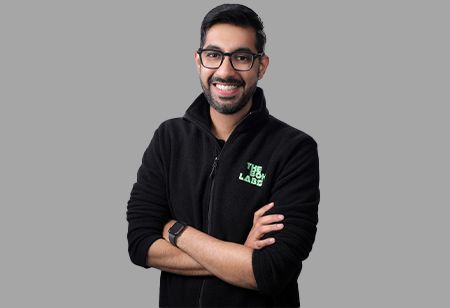
In an exclusive interaction with Adlin Pertishya Jebaraj, correspondent of Homes India Magazine, Siddharth Kochhar, Founder of The BOH LABS, talks about a major change taking place in the boutique hotel industry, whereby luxury is now defined by how authentic, unique, and culturally integrated a guest experience is through the use of technology and having flexible staffing models to ensure consistent operations.
Siddharth Kochhar is an experienced hotel development professional with a wealth of experience in hotel growth, brand positioning, and managing stakeholders. With extensive experience at Wyndham Hotel & Resort, Bloom Hotel, and Fabhotels, he has led many successful developments in India and elsewhere in the Eurasian region.
How do you see the current trend in terms of “luxury” evolving in the boutique hospitality segment today?
Three words: authenticity, attention, agency. The market is proving this shift is real.
Consider elsewhere in Palampur—featured in Mr & Mrs Smith's collection. It's a minimalist mountain property with no TV, no spa, no "amenities" in the traditional sense. The average room rate is Rs 35,000 per night, with 87 percent occupancy even in the shoulder season. Guests are paying premium prices for what's been removed—distraction, pretence, disconnection.
At Vana in Dehradun. They spend an average of 45 minutes per guest on pre-arrival consultation—understanding health goals, dietary restrictions, spiritual interests, even work schedules. This investment translates to an 82 percent return guest rate and average stays of 7.3 nights versus the industry standard of 2.1 nights.
The Postcard Hotels across Goa and Karnataka have created eight properties, each wildly different, each hyper-specific to its micro region. Their Cuelim property occupies a 200-year-old Portuguese manor. Their Coorg estate is surrounded by working coffee plantations where guests can meet the farmers. The result? They command rates 35-50 percent higher than comparable properties and maintain year-round occupancy above 70 percent.
The Indian domestic traveller has changed everything. They represent 68 percent of luxury bookings now, they've travelled internationally, and they're asking questions like: "Is this coffee organic?" "Can I meet the artisans?" "What's your actual community impact?"
For instance, previously, I worked with a Rajasthan property that transparently shares that 23 percent of operational revenue goes directly to local craft communities through procurement. They don't hide this in CSR reports—it's part of their narrative. Bookings from domestic travellers increased 94 percent year-over-year once they started communicating this clearly.
Also Read: Bhandup Steps into the Spotlight as Mumbai's New Urban Landmark
What are the major operational challenges boutique hotels face in delivering hyper-personalized guest experiences?
Most boutique hotels claiming "hyper-personalization" are faking it. True personalization requires infrastructure investment that's financially brutal for small properties.
The data problem: Real personalization needs integrated systems capturing guest intelligence across every touchpoint. We're talking CRM software costing Rs 8-15 lakhs annually for a 25-room property—plus training staff to actually use it consistently.
I've seen properties where the front desk knows a returning guest prefers late checkout, but housekeeping doesn't know they like blackout curtains drawn. The information exists in three separate systems that don't talk to each other. The guest experience needs to repeat preferences to every department.
Evolve Back properties (formerly Orange County) across Coorg, Hampi, and Kabini invested Rs. 2.3 crores in unified technology infrastructure. Expensive, but their repeat guest rate is 76 percent versus an industry average of 31 percent. The math works—if you can afford the upfront investment.
The human capital crisis: the average hospitality staff turnover in India is 38 percent annually. At boutique properties requiring deep personalization, losing trained staff means losing institutional memory.
Suján Jawai addressed this by hiring local tribal communities and investing 6-8 months in training them as naturalist guides and hospitality professionals. Their turnover rate is 11 percent because they're paying 40 percent above market rates, providing housing, and creating genuine career progression. But most 20-room properties can't absorb those costs.
I consulted with a heritage property in Rajasthan that was spending Rs. 18 lakhs annually on recruitment and training due to turnover. We restructured their compensation—increasing base pay by 28 percent, adding performance incentives, and creating skill development programs. First-year cost increase: Rs. 11 lakhs. Second-year recruitment costs of Rs. 3 lakhs. Staff retention is 71 percent. The ROI is clear, but you need capital reserves to bridge that first year.
The seasonal brutality: Indian tourism is viciously seasonal. Rajasthan properties see 78 percent of annual revenue in October-March. You have 25 rooms, 6 months of peak occupancy, and you need to maintain staff year-round for personalized service ratios.
The only solutions are: Pay staff year-round and accept 6 months of losses, develop shoulder-season programming that actually works, or target different segments of domestic weekend travellers, corporate retreats, and wellness seekers across different seasons.
Supply chain reality: A guest requests vegan, gluten-free meals using only local ingredients. Sounds reasonable until you're in Rajasthan in May, trying to source fresh produce. Or you're in Ladakh, where supply trucks come twice weekly.
Chamba Camp Thiksey solved this through radical transparency and flexibility. Their menu changes based on what's actually available. They explain why to guests—this is what the local harvest provides right now. Guest satisfaction is 4.8/5 on reviews specifically mentioning food, despite limited choice. Honesty beats false promises.
Instead, pick 3-4 touchpoints where you'll be genuinely exceptional—maybe it's room customization and culinary personalization, but not every single interaction. Be transparent about your strengths.
Also Read: Biophilic Design Meets Wellness: New Blueprint for Indian Urban Homes
How do boutique hotels leverage local culture, storytelling, and design to enhance personalized luxury?
The difference in one metric: economic participation.
Narendra Bhawan in Bikaner doesn't just display art—they commission Rs. 40-60 lakhs annually from Rajasthani artists. Artists are credited by name, guests can visit studios, and pieces are available for purchase, with artists receiving 70 percent of the sale price. The hotel takes 30 percent for curation and display. That's authentic integration.
Compare that to properties buying generic "tribal art" wholesale and marking it up 500 percent. One model builds community relationships; the other extracts aesthetic value without economic benefit.
Real numbers from real integration:
The Postcard Velha in Goa sources all textiles from named Goan weavers. They spent Rs. 23 lakhs in 2023 on local craft procurement—furniture, textiles, tilework, art. That money went to 37 individual artisans and small workshops. In return, they get an unreplicable design and stories that resonate deeply with guests. Their Google reviews mention "authentic Goan character" in 67 percent of 5-star ratings.
Devi Garh in Rajasthan (Michelin luxury guide featured) offers cooking experiences using royal family recipes. But here's the key: they take guests to tribal markets to source ingredients, explaining the social history—why certain dishes exist, what they reveal about water scarcity, how ingredients reflect ancient trade routes.
A guest shared his experience, "I've taken cooking classes in Italy, Thailand, and France. This was the first time I understood food as a cultural document, not just a recipe." That depth creates loyalty. Devi Garh's repeat booking rate for their culinary program 64 percent.
The contemporary culture opportunity:
Malabar House in Fort Kochi features rotating exhibitions from Kerala's contemporary art scene. They hosted 8 artist openings last year where guests met creators. Room occupancy during exhibition openings: 96 percent versus 73 percent baseline. Guests extend stays to attend events.
The mistake is thinking culture must be historical. Contemporary culture is often more honest and engaging.
My test for authenticity: If the property closed tomorrow, would local artisans, guides, and suppliers be economically worse off? If you've built extractive tourism, if they're better because you've invested in capabilities and relationships, you've done something meaningful.
Pugdundee Safaris across Madhya Pradesh employs naturalists who are published researchers. These aren't guides reading scripts—they're scientists discussing evolutionary biology, conservation challenges, and ecosystem dynamics. The guest demographic of 73 percent has postgraduate degrees, average age 41, looking for intellectual engagement, not just tiger sightings. Premium pricing: 60 percent above competitors. Know your audience. Serve them depth, not theatre.
In what ways do boutique hotels use spatial planning, room customizability, and flexible layouts to enhance guest comfort?
Let me share a specific example. We designed a property in Coorg where every room has three distinct outdoor spaces—a morning sun terrace, a shaded afternoon courtyard, and an evening verandah for cooling breezes.
Guests don't choose at booking. They discover these spaces and use them based on their rhythm. Early risers gravitate to the sun terrace with coffee. Remote workers claim the shaded courtyard mid-day. Couples occupy the verandah at sunset.
The same room adapts to different needs without any staff intervention. That's spatial personalization—architecture providing options, guests creating their own experience.
Multi-sensory customization—the numbers: Alila Diwa Goa installed circadian lighting systems (investment: Rs 4.2 lakhs per room). Guest sleep quality ratings increased from 3.9/5 to 4.7/5. Crucially, guests who experienced the lighting were 3.2x more likely to rebook.
They also offer scent customization—five fragrance profiles or fragrance-free rooms. Sounds minor, but 34 percent of guests actively choose a non-default option, and guest satisfaction scores for "room comfort" increased 18 percent.
Physical flexibility that works: We designed rooms with furniture on casters—genuinely movable, not performative. Business travelers create larger work areas. Families open up floor space for children. The same 420-square-foot room serves radically different needs.
Cost impact is Rs 85,000 per room for quality movable furniture versus Rs 52,000 for fixed. Premium charged: Rs 4,200 more per night. Payback period: 37 room-nights, or roughly 2-3 months at 65 percent occupancy.
Also Read: Smart Urban Design Blends Ecology, Culture, and Modern Living
Climate-responsive design: Chapslee in Shimla (Mr & Mrs Smith heritage collection) practices seasonal room allocation. Summer rooms on northern exposures, winter rooms capturing southern sun. Guests can request transfers based on the weather.
This seems operationally complicated—and it is. But guest reviews specifically mention "perfect room for the season" in 43 percent of reviews. That specificity drives bookings.
The bathroom truth: It’s renovated a property's bathrooms—separated toilet, walk-in rainfall shower with seating, soaking tub positioned for Himalayan views, counter space for unpacking toiletries. Investment: Rs 5.8 lakhs per bathroom.
Before renovation: average guest rating 4.1/5. After: 4.8/5. Specific mentions of bathrooms in reviews jumped from 12 percent to 68 percent. Premium pricing justified: Rs 6,500 more per night. ROI: 14 months.
The principle: Give guests genuine control, not an illusion of control. That means interfaces—apps, tablets, physical controls—that allow deep customization without overwhelming complexity.
West Goa offers private plunge pools for 78 percent of rooms. Because Indian guests strongly prefer swimming in privacy. Occupancy for pool rooms: 91 percent versus 72 percent for non-pool rooms. Pricing premium: 35 percent. The data justified the investment.
How do you see boutique hotels evolving over the next decade as personalization becomes the core of luxury?
Let me make three specific predictions:
Hyper-niche specialization becomes the only viable model.
Generic boutique is a contradiction. By 2030, successful properties will be built around specific passions—serious culinary hotels, art residencies, wellness retreats with medical-grade diagnostics, adventure properties with genuine expertise.
Six Senses Fort Barwara is pioneering this. They combine Ayurvedic assessment with continuous glucose monitoring, microbiome analysis, and sleep tracking. Investment in wellness technology: Rs 1.8 crores. Average guest spend: Rs 4.2 lakhs for 7-night programs. Occupancy: 84 percent year-round.
The alternative—trying to be everything to everyone—will fail. Specialization allows operational excellence and attracts guests willing to pay for depth.
Extended stays blur hotel/residence completely.
Remote work has changed everything. We're designing a property now with "seasonal residencies"—one-month minimum stays, full kitchens, workspace infrastructure, laundry access, and community programming.
Target: professionals spending monsoon in Kerala, winter in Rajasthan, summer in Himachal. They're not tourists—they're climate migrants seeking quality of life. Potential market size in India: 2.3 million affluent remote workers by 2027.
Pricing model: Rs. 1.8-2.4 lakhs per month versus Rs. 8,000-12,000 per night transient rates. Lower per-night revenue but guaranteed occupancy, reduced turnover costs, and community building that enhances property culture.
Regenerative impact becomes non-negotiable.
Sustainability is table stakes. Regeneration—actively improving environmental and community conditions—will differentiate.
We're working with a property developer to develop a native species botanical garden where guests participate in conservation. They're also documenting local tribal plant knowledge, ethno botanical research that will be published and shared.
This attracts a specific guest: educated, values-driven, willing to pay a premium for meaningful impact. They represent 31 percent of luxury travellers in India (up from 18 percent in 2019) and spend 47 percent more on accommodation than average luxury travellers.
In conclusion, personalization is moving from "how we serve you" to "how we enable you to be your best self." Properties that understand this—and build systems to deliver it—will command premium pricing and fierce loyalty.
Those who treat it as marketing language without operational commitment will fade into irrelevance.
The future isn't about more amenities. It's about meaning, depth, and spaces that genuinely adapt to individual human needs. That's infinitely harder to build than a marble lobby. And infinitely more valuable.
We use cookies to ensure you get the best experience on our website. Read more...
Copyright © 2026 HomesIndiaMagazine. All Rights Reserved.
