

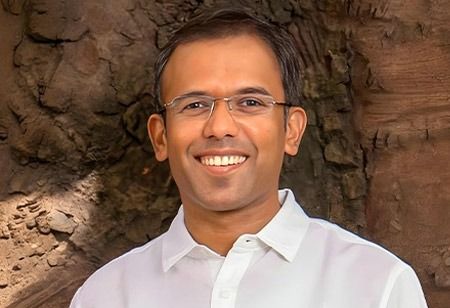
In an exclusive interaction with Adlin Pertishya Jebaraj, Correspondent at Homes India, Srinath Setty, CEO of Hosachiguru, points out how the agricultural-focused communities are transforming real estate out of appreciation-based investments to experience and mission-based ownership based on the well-being of the soil, water conservation, and regenerative agriculture.
Setty brings to Hosachiguru a history of more than ten years of entrepreneurial experience and an excellent marketing and communications background with his desire to transform the company into an experience-oriented and environmentally-minded real estate blending permaculture with community living. The work of Setty is based on rendering farming accessible, purposeful, and meaningful, and leading to a change towards conscious living and the creation of ecological values.
Agri-hoods are increasingly being positioned as a conscious lifestyle movement. What are the fundamental socio-economic and behavioral shifts driving demand for farm-centric residential communities today?
What is driving this movement is not a trend but a correction. Referring to traditional living patterns, the previous generations lived in large village spaces where they grew their own food. Over the past few decades, urban India has moved toward hyper-convenience. While access to income, digital connectivity, and infrastructure has increased, the quality of life has declined. People no longer have control over their food or environment, and that gap is now being felt.
The shift is a return to roots. Real estate in India was historically purchased largely for appreciation, beyond a primary residence. Many individuals invested in multiple homes or commercial properties purely from an income perspective. However, that mindset is evolving, as more liquid investment avenues are available today.
Farmland is increasingly viewed from an experiential perspective. Buyers want their children to understand where food comes from, grow their own produce, and spend meaningful weekends. This represents a correction back to foundational values.
What are the major operational challenges in maintaining productive farmland within residential developments? .JPG)
The most residential developments treat green spaces as landscaping, whereas farming is a living biological system. Agriculture demands scientific management involving soil science, crop production, water management, and seasonal disciplines.
Landscaping is designed for aesthetics, but farmland must be productive—not only for one season but for generations. Soil health must be preserved. Pest management also differs significantly. While landscaping may involve chemical sprays, farmland cannot adopt such practices because residents consume the produce. Pest control must be managed safely within a living ecosystem.
Farmlands like Hosachiguru, the approach is scientific. The process begins with understanding the watershed, topography, and surrounding conditions. A long-term vision is established early, focusing on strengthening soil and preserving water each year. If these two elements are maintained, the system remains sustainable.
Also Read: How Broker-Free Platforms Are Transforming Homebuying
What measures have been taken to ensure food and soil quality?
The foundational question is whether food is being grown to generate profit or for personal consumption. The focus is on optimization rather than maximization.
Are agri-hood buyers lifestyle-driven, investment-oriented, or a hybrid? Also, how do integrated farm communities differ from conventional townships?
.JPG) The current modern buyers do not view the decision as binary. Today’s luxury is defined not by excess but by access—access to food, clean water, silence, meaningful community, and family experiences. Luxury is shifting globally toward experiential ecosystems rather than isolated homes, and farm-centric communities align with this change.
The current modern buyers do not view the decision as binary. Today’s luxury is defined not by excess but by access—access to food, clean water, silence, meaningful community, and family experiences. Luxury is shifting globally toward experiential ecosystems rather than isolated homes, and farm-centric communities align with this change.
Conventional townships are designed around infrastructure such as roads, plot sizes, and clubhouses. In contrast, integrated farm communities are designed around ecology.
An environmental study is conducted first, analyzing the watershed, soil, wildlife, and surrounding risks. Permaculturists then create a design document that determines the placement of irrigation tanks, rainwater harvesting systems, cultivation zones, and non-productive elements. Plots are designed last. Ecology takes precedence over infrastructure, intending to minimize long-term friction and avoid excessive alteration of the land.
How do nature-led environments contribute to mental wellness and how is technology, including AI, integrated into farm operations?
The issue today is oversimulation. Nature operates differently and offers inherent peace. Humans find tranquility in forests because of ancestral memory embedded in DNA. Proximity to green spaces improves focus and resilience. He sees intentional living becoming increasingly important, especially as AI and technological disruptions expand.
The advanced technology supports communication, irrigation management, lifecycle tracking, and operational transparency. The MyFarm app enables customers to monitor activities, request photographs and videos, book services, host wellness events, and manage payments. The goal is to make ownership convenient and accessible.
Also Read: Mid-Market Hotels and Tech Redefine South India Hospitality
What is the next evolution of farm-centric real estate? What is the 5–10 year vision, and what message is there for young entrepreneurs?
The next development is regenerative agriculture at scale. In comparison with organic farming, regenerative agriculture does not rely on outside inputs and recycles the ecosystem with on-farm resources. The communities are formed on the basis of common objectives like regeneration of soil, recharge of water and improvement of biodiversity. Although technology can help in this vision, it is essential that there should be a harmonization of like-minded persons. This is already evolving with the flexibility of work-from-home and the revolution of AI.
The larger vision is to facilitate a green lifestyle and incorporate farming into daily life. Despite popular belief, not all the buyers are of the 40s. Others have opted to buy farmland and then acquire a main city house since there is value of land and need to be out of the city.
Access is facilitated by flexible payment structures of more than two and three years. The ownership, maintenance and exit procedures will be simplified. Since barren land can be converted into vibrant ecosystems and food forests, it can be resold more easily. The co-farmers are increasing steadily as well and there are about 40-50 co-farmers who are joining monthly. This is purpose-driven real estate that is more than simple investing and it is still becoming more acceptable.
We use cookies to ensure you get the best experience on our website. Read more...
Copyright © 2026 HomesIndiaMagazine. All Rights Reserved.
