

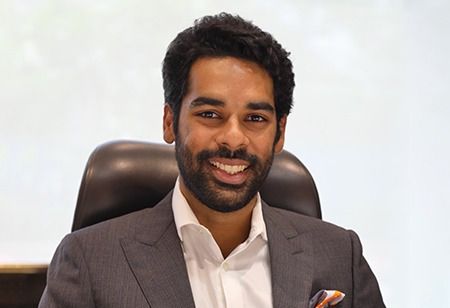
Rishabh Periwal, Senior Vice President – Pioneer Urban Land & Infrastructure in an interaction with Homes India Magazines shared his views on how the changing family structures, increased life expectancy, and evolving lifestyle aspirations influencing are the demand for modern senior living spaces, the factors that are driving the growing shift from conventional retirement homes to lifestyle-led senior living communities in India and more.
Rishabh Periwal serves as the senior vice president at Pioneer Urban Land & Infrastructure Ltd. A member of the promoter family, Periwal combines a deep rooted legacy of trust with a modern, data driven approach to urban development. He is an alumnus of the NYU Stern School of Business, where he earned a Bachelor of Science in Business with concentrations in Finance and Management. He was honored with the University’s Founder’s Award, reflecting his commitment to excellence early in his career.
What factors are driving the growing shift from conventional retirement homes to lifestyle-led senior living communities in India?
The concept of senior living in India has evolved significantly over the past few years, driven largely by changing mindsets and lifestyle expectations. Today’s seniors are more financially independent, health-conscious, and socially active than previous generations. Rather than viewing retirement as a phase of isolation, many now seek communities that enable them to remain engaged, socially connected, and focused on overall wellness while continuing their daily routines with independence.
This shift has also been supported by rapid infrastructure development across NCR. Corridors such as Dwarka Expressway, Golf Course Extension Road, SPR, and NH-48 offer improved connectivity, healthcare access, and stronger social infrastructure, making them increasingly suitable for lifestyle-oriented senior living communities.
How are changing family structures, increased life expectancy, and evolving lifestyle aspirations influencing the demand for modern senior living spaces?
The demand for modern senior living spaces is being shaped by changing family structures, rising life expectancy, and evolving lifestyle aspirations. With the rise of nuclear families and increasingly mobile work cultures, many senior citizens today prefer living environments that offer comfort, security, convenience, and social interaction without depending entirely on family members for day-to-day support.
Retirement is also no longer viewed as a phase of complete withdrawal from active life. Many seniors continue to travel, pursue hobbies, remain socially engaged, and prioritize wellness well into their seventies and eighties.
Lifestyle expectations have evolved considerably as well. Today’s seniors are looking beyond just housing; they seek peaceful surroundings, wellness-oriented amenities, recreational spaces, and a strong sense of community.
Overall, demand is growing because senior citizens increasingly value independent, comfortable, and community-driven living over traditional retirement setups.
Also Read: The Role of Rapid Transit in Urban Development in the NCR
What role do wellness, healthcare integration, social engagement, and recreational amenities play in shaping the next generation of senior living communities?
Wellness, healthcare integration, social engagement, and recreational amenities have become central to the design and functioning of modern senior living communities.
Wellness is now a major priority for senior residents, with increasing focus on active lifestyles, preventive healthcare, and stress-free living. As a result, communities are being designed with walking tracks, yoga and meditation spaces, landscaped gardens, and fitness facilities that encourage healthier daily routines.
Healthcare integration is equally important. Easy access to medical institutions provides reassurance not only to residents but also to their families. Features such as periodic health check-ups, emergency response systems, and proximity to hospitals are increasingly becoming integral components of senior living projects, particularly in rapidly developing urban markets like Gurugram.
Social engagement also plays a critical role. Communities that encourage interaction through hobby clubs, cultural activities, group events, and shared gathering spaces help residents remain socially active and emotionally connected.
In addition, recreational amenities such as libraries, indoor gaming areas, cafés, community centres, and open green spaces contribute towards creating a balanced and enjoyable living environment.
How are developers balancing independence, safety, and community-centric living while designing spaces for senior residents?
Today, developers are focused on creating senior living communities that balance independence, safety, and social engagement. The objective is to create environments where seniors can live comfortably and independently while also feeling secure and connected.
Modern senior living communities are no longer designed as conventional assisted living facilities. Instead, they are planned as comfortable residential environments that support independent living. Features such as wider walkways, anti-skid flooring, enhanced lighting, wheelchair-friendly access, and seamless movement within the community help residents manage their daily routines with greater ease and comfort.
Safety remains a key priority as well. Gated developments, CCTV surveillance, emergency response systems, digital visitor management, and trained staff collectively contribute to a more secure living environment.
Many projects are also integrating smart technologies and healthcare support systems to strengthen emergency response and overall resident safety.
At the same time, developers are giving equal importance to community-centric living. Emotional well-being and social interaction are often as important to seniors as physical comfort. This is why projects increasingly include clubhouses, landscaped gardens, activity zones, and community spaces that encourage interaction and participation in everyday activities.
In what ways is technology transforming the senior living experience, particularly in areas such as healthcare monitoring, security, and everyday convenience?
Today, developers are focused on creating senior living communities that balance independence, safety, and social engagement. The objective is to create environments where seniors can live comfortably and independently while also feeling secure and connected.
Modern senior living communities are no longer designed as conventional assisted living facilities. Instead, they are planned as comfortable residential environments that support independent living. Features such as wider walkways, anti-skid flooring, enhanced lighting, wheelchair-friendly access, and seamless movement within the community help residents manage their daily routines with greater ease and comfort.
Safety remains a key priority as well. Gated developments, CCTV surveillance, emergency response systems, digital visitor management, and trained staff collectively contribute to a more secure living environment.
Many projects are also integrating smart technologies and healthcare support systems to strengthen emergency response and overall resident safety.
At the same time, developers are giving equal importance to community-centric living. Emotional well-being and social interaction are often as important to seniors as physical comfort. This is why projects increasingly include clubhouses, landscaped gardens, activity zones, and community spaces that encourage interaction and participation in everyday activities.
How important are location, accessibility, and proximity to healthcare infrastructure in determining the success of lifestyle-oriented senior living projects?
Location plays a critical role in determining the success of senior living communities. For senior residents, convenience, accessibility, and healthcare support are closely interconnected, making location selection especially important for lifestyle-oriented senior living developments.
Easy access to healthcare infrastructure remains one of the primary considerations. Proximity to hospitals, clinics, pharmacies, and emergency medical facilities provides peace of mind to both residents and their families. In senior living, healthcare accessibility is not an added advantage; it is a fundamental requirement.
Strong connectivity is equally important. Good access to key parts of the city makes it easier for family members to visit regularly and improves overall convenience for residents.
In NCR, corridors such as Dwarka Expressway, Golf Course Extension Road, SPR, and NH-48 are increasingly emerging as preferred locations due to their improving connectivity to Delhi airport, healthcare institutions, and commercial centers.
Senior residents also prefer locations that offer easy access to parks, retail markets, community spaces, and essential daily services. Walkability and reduced travel time are becoming increasingly important considerations.
The surrounding environment also matters significantly. Seniors generally prefer peaceful surroundings, open green spaces, and less congested environments while remaining well connected to urban infrastructure.
As the senior living segment continues to evolve in India, developers increasingly recognize that the right location directly influences resident comfort, convenience, and long-term demand.
Also Read: Luxury Housing in NCR: What's Driving Gurugram's Rs 1 Cr Boom?
Looking ahead, do you believe senior living communities will evolve into a mainstream residential category in India, and what trends are likely to define the sector’s future growth?
Senior living communities are gradually becoming an important part of India’s residential real estate landscape. The long-term growth potential of this segment remains strong, driven by changing demographics, evolving urban lifestyles, and growing awareness around wellness-focused living for senior citizens.
More families in India are becoming open to the idea of organized senior living communities. At the same time, changing family dynamics and increased work mobility are encouraging people to view senior living as a practical, comfortable, and long-term lifestyle option.
Going forward, the sector is expected to move increasingly towards lifestyle-oriented communities rather than conventional retirement housing models. Senior residents will continue to seek developments that integrate wellness amenities, healthcare support, recreational spaces, social engagement, and everyday convenience within a single ecosystem.
Technology will also continue to shape the sector significantly. Smart healthcare systems, digital monitoring, app-based services, and advanced security infrastructure are expected to become standard features in future developments.
Another important trend will be the growth of senior living hubs across well-connected urban corridors. In NCR, areas around Dwarka Expressway, SPR, and other emerging infrastructure-led locations are likely to attract increasing interest due to improving connectivity and healthcare access.
There will also be greater emphasis on sustainability, open green spaces, and community-driven living environments. Overall, senior living in India is steadily evolving from a niche category into a more accepted and mainstream residential segment.
We use cookies to ensure you get the best experience on our website. Read more...
Copyright © 2026 HomesIndiaMagazine. All Rights Reserved.
