

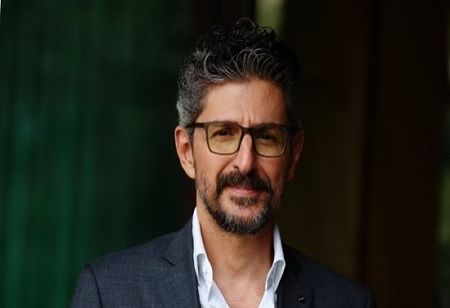
Despite recent discussions around a slowdown in India’s housing market, Boman Irani, CMD of Rustomjee Group, has reaffirmed confidence in the company’s growth trajectory.
He stated that the developer continues to witness healthy traction across projects, supported by its strategy of entering demand-driven micro-markets and relying on a data-led development approach. Irani noted that the company closely monitors city expansion patterns and upcoming infrastructure developments before launching projects. By analyzing how improved connectivity shapes residential demand, the company focuses only on areas where significant infrastructure or urban development is underway.
Key Highlights
According to him, this strategy has consistently delivered strong results for the developer. The company intends to maintain a sharp focus on redevelopment and cluster redevelopment projects across the Mumbai Metropolitan Region (MMR).
Also Read: Rustomjee Launches Cliff Tower, a niche Residential Project
"The demand overall, according to us in the Mumbai Metropolitan Region (MMR) continues to exist. We did see a lot of news articles that said that there is a slowdown. Of course, the numbers do reflect a reduced sales in terms of volume. But the project that we have launched and we have chosen and where we are seeing traction taking place are the ones that we are taking up," Irani said while responding to a question relating to the demand environment during the earnings call for Q3DY26.
Redevelopment remains a major growth avenue in Mumbai, where ageing housing societies and land scarcity continue to create opportunities for large-scale urban renewal. Irani reiterated that selecting the right location is critical and requires a deep understanding of demand dynamics within individual micro-markets.
"So we only enter those locations where infrastructure or there's some other meaningful development taking place, and this has held us in good stead so far. And also, the Western suburbs (of Mumbai) continue to be strong. And if you've seen our business development (BD), all the cluster developments that I have maintained, three of them are in the Western suburbs, where there is a great amount of demand that we see even today. And all the data, again, points towards a strong, growing population in these areas. So we are fairly confident of our ongoing project as well as the future BD that we are doing," Irani said.
“I would like to highlight our increasing focus on cluster redevelopment. Cluster redevelopment allows us to create gated communities. Gated communities are probably the most sought-after locations or housing for people to move into because they provide a whole host of advantages, including larger layouts, better communities, etc," said Irani.
Among key markets, Mumbai’s western suburbs continue to demonstrate strong demand. Three of the developer’s recent cluster redevelopment projects are located in this region, reflecting its sustained residential appeal. Population growth and expanding infrastructure connectivity in these areas further reinforce the company’s confidence in both current developments and future expansion plans.
Irani emphasized that the company’s latest project additions align with its broader vision to strengthen leadership in the MMR redevelopment segment, enhancing brand visibility and long-term growth in high-potential locations. He has previously stated that redevelopment of old buildings will remain a dominant trend in Mumbai for more than two decades, presenting significant opportunities even for developers entering the city from other markets.
Meanwhile, Keystone Realtors reported mixed operational performance. Sales bookings declined slightly by 3% to ₹837 crore, although the area sold increased around 13% to about 0.46 million sq ft, indicating strong demand volumes despite softer value growth. Collections also declined marginally, and profitability faced pressure due to revenue volatility. However, the company’s nine-month pre-sales and area sold figures remained significantly higher year-on-year, reinforcing momentum in redevelopment-focused projects across Mumbai.
"We continue to build communities, and these communities are far larger seen in the gated communities, which come out of the cluster redevelopments. We made remarkable progress in this area, and we've added several large-scale cluster redevelopment projects, including Lokhandwala, GTB Nagar, Dindoshi and Malad West," he said.
Also Read: Rustomjee Wins Andheri Redevelopment Project
Industry data further supports the redevelopment trend. According to Knight Frank, Mumbai accounted for nearly 40% of India’s redevelopment pipeline in major cities, driven by limited land supply and infrastructure upgrades such as metro expansions and coastal road projects.
Source: HTRealEstate
We use cookies to ensure you get the best experience on our website. Read more...
Copyright © 2026 HomesIndiaMagazine. All Rights Reserved.
