

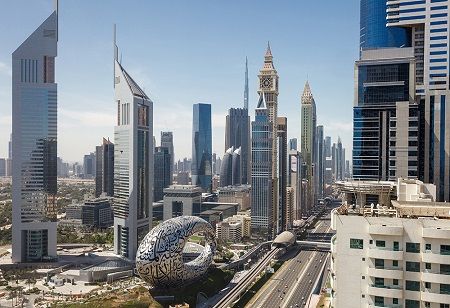
Synopsis: Dubai's residential property market records housing transactions worth AED 225.7 billion in the first half of 2026, down 16.1% year-on-year amid geopolitical tensions, while average home prices continue to rise, highlighting the market's resilience despite weaker buyer sentiment.
Dubai's residential real estate market witnessed a moderation in transaction activity during the first half of 2026 as geopolitical tensions in the Middle East weighed on investor sentiment.
According to a report by property consultancy ANAROCK Middle East, housing transactions totalled AED 225.7 billion during the January-June period, representing a 16.1% decline from AED 269.1 billion recorded in the corresponding period of 2025. Despite the slowdown, the market remained stronger than in 2024, reflecting the underlying resilience of Dubai's real estate sector.
The report attributes the decline primarily to uncertainty arising from the US-Iran conflict, which temporarily affected buyer confidence during March and April. However, it notes that the impact was largely sentiment-driven rather than structural. Residential property prices softened by only 4-7% during the peak of the geopolitical tensions, while the broader market demonstrated a relatively quick recovery compared to previous crises.
Also Read: UAE Rents Surge Over 50% in One Emirate Amid Housing Demand
Despite lower transaction values, property prices continued to register annual growth. The average residential price in Dubai reached around AED 1,900 per square foot in the first half of 2026, up 6% from approximately AED 1,800 per square foot a year earlier. The report suggests that sustained demand for premium properties and strong investor interest helped support pricing even as transaction volumes declined.
The study also highlights the diversity of Dubai's property market. Buyers from more than 150 countries invested in residential real estate during 2025, with Indians accounting for the largest share at 22%, followed by investors from the United Kingdom and China. More than 129,000 new investors entered the market during the year, while nearly 80% of transactions were funded through cash purchases, reducing the market's exposure to interest rate fluctuations. Off-plan properties continued to dominate activity, accounting for nearly 70-77% of residential transactions.
Also Read: Amsa Hospitality, Artal Hotels, Hyatt Sign MoU for 3 Hotels
ANAROCK noted that Dubai's property market has historically recovered faster from geopolitical events than from global financial crises. While transaction activity declined in the first half of 2026, the combination of rising property prices, a diversified international buyer base, and continued investor participation indicates that the market's long-term fundamentals remain strong. The consultancy expects premium residential locations to continue attracting global capital as investor confidence gradually improves and regional uncertainties ease.
We use cookies to ensure you get the best experience on our website. Read more...
Copyright © 2026 HomesIndiaMagazine. All Rights Reserved.
