

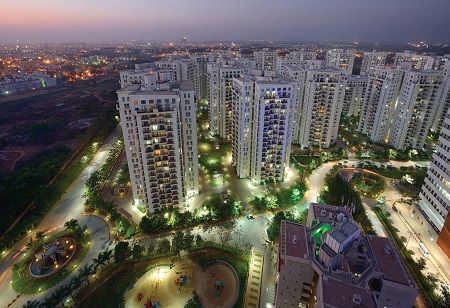
As 2025 comes to an end, India’s real estate sector, especially the Delhi-NCR market has emerged far stronger and more resilient than in earlier cycles. The industry is witnessing a decisive shift away from speculative activity towards end-user- and fundamentals-driven demand, backed by policy continuity, greater regulatory transparency and robust infrastructure development.
Luxury and premium housing continue to record healthy, demand-led growth, driven by changing lifestyles and a stronger emphasis on sustainability and wellness-oriented design.
Supported by stable borrowing costs, improved connectivity through expressways and metro networks, and rising buyer confidence, the sector is well placed for consistent, quality-led growth in 2026 and the years ahead.
Ravi Prakash Pandey, Founder and Chairman Amrawati Group said, “This year, the influence of technology and transparency has been clearly visible across the real estate sector. Growing trust in digital processes and on-time delivery has transformed buyer expectations. This trend will only strengthen in the years ahead.”
Ashish Bhutani, CEO, Bhutani Infra said, “The Indian real estate industry, particularly the Delhi NCR, is functioning in a far more stable, transparent, and policy-driven environment in 2025 than has been experienced in previous cycles. The luxury sector is witnessing a healthy, demand-driven growth, thanks to changes in lifestyles, rising incomes, and a growing requirement for design, sustainability, wellness.
There is a noticeable shift in the overall market sentiment from a speculation-driven to a fundamental buying, with an emphasis on those projects which are sound, policy-friendly, and usable in the long run. This is made easy by the stable regime on the Repo rate, which has influenced the overall predictability of the cost of borrowings, thereby making way for a tempered buying.
On a side note, the infrastructure developments in NCR, such as development of Expressways, Metros, Transport Corridors, and Urban Renewal Projects, have enhanced accessibility to NCR significantly. The regulatory changes, which are dominating the real estate sector, have led to a rise in overall transparency and accountability on the part of the real sector. The real estate sector is set to grow on the back of infrastructure development, tempered supply, and a growing need for quality, future-ready, real estate in the upcoming 2026 and onwards.”
Neeraj K Mishra, Executive Director, Ganga Realty
“The year 2025 has been a defining phase for NCR real estate, especially Gurgaon, which continues to set the benchmark for modern urban living. We have seen a clear shift in buyer behaviour, with customers prioritizing larger, well-planned homes, integrated amenities, and sustainable community designs. The city’s strongest corridors, from Dwarka Expressway to SPR and New Gurgaon, benefited immensely from improved connectivity and expanding social infrastructure. With major projects nearing completion and policy stability supporting consumer sentiment, 2026 is positioned to unlock even stronger end-user and investor participation. At Ganga Realty, we believe the coming year will see accelerated demand for quality-driven, value-focused developments that cater to long-term aspirations. Gurgaon’s evolution as a lifestyle-first market will continue to drive its leadership in NCR’s real estate landscape.”
Saransh Trehan, Managing Director, Trehan Group
“As 2025 comes to an end, India’s real estate sector stands stronger and more confident than ever. This year has reinforced homebuyer trust and strengthened the fundamentals of the market. Gurugram, in particular, has outperformed every expectation, driven by world-class infrastructure, corporate growth, and a lifestyle ecosystem that continues to evolve rapidly. We have seen sustained demand across premium, luxury, and well-planned mid-segment housing, reaffirming the city’s position as India’s most aspirational destination. Emerging corridors like Bhiwadi, Alwar, and Neemrana have also gained momentum due to improved connectivity and rising aspirations. As we step into 2026, I believe the sector is poised for one of its most transformative years, with sustainability, innovation, and customer-centric development shaping the future of Indian real estate.”
Kunal Seth, Director of Shalimar Corp said, "2025 has not just been a year of growth for Uttar Pradesh’s real estate sector, but a defining phase of transformation. Evolving customer preferences, towards superior design, quality, and smart living, has reshaped the market’s trajectory. At Shalimar, we are proud to be at the heart of this change and remain committed to elevating the future of urban living.”
Murali Malayappan, Chairman & Managing Director, Shriram Properties
“2025 marked a decisive shift in homebuyer preference towards large, trusted developers, further accelerating consolidation in the real estate sector. This was reinforced by a stable macroeconomic environment and favourable policy. The mid-market and mid-premium segments witnessed strong momentum fuelled by aspirational younger buyers seeking ‘premiumization’ superior amenities, curated community experiences, and enhanced lifestyle value. Looking ahead, 2026 is poised for accelerated growth, driven by operational efficiency, digital integration, and strengthening demand, especially in the Southern markets. Sustainability will become a mandatory market standard, with wider adoption of green building practices. Developers will increasingly leverage prop tech, AI-based customer insights, and automation in construction, improving margins, reducing timelines, and enhancing overall predictability. Continued government focus on infrastructure, combined with the potential rationalization of GST on under-construction properties, stands as a significant policy catalyst to unlock the sector's full economic potential.”
Boman Irani, Chairman & Managing Director, Rustomjee Group
“As we close this year, I find myself grounded by the fundamentals that have always driven Rustomjee, clarity of purpose, disciplined execution, and an unwavering focus on value for the end customer. This year’s performance, including strong pre-sales momentum in Q2 FY26 and significant business development ahead of plan, confirms that real demand continues to outpace supply in the right segments. Across the ₹3.5–₹5 crore range, where interest remains consistently robust, we have seen genuine homebuyers engage with conviction, reflecting confidence in our product and the strength of underlying market fundamentals.
We remain focused on where real growth is being created. Our emphasis continues to be on thoughtfully positioned residential and redevelopment projects in the Mumbai Metropolitan Region, where demand is resilient and a clear product, market fit creates meaningful outcomes. We are broadening our footprint with intent, exploring township opportunities and planned future entries into adjacencies such as Pune and Nagpur, guided by discipline and a long-term value mindset.
Success should be measured beyond sales figures; it is equally reflected in how responsibly we shape the built environment. This year, Rustomjee released its first GRI-aligned sustainability report, reinforcing our commitment to creating places that endure for generations. Sustainability and accountability are embedded in how we think, plan, and deliver from net-zero initiatives to community empowerment because building responsibly is inseparable from building well.
Looking ahead to 2026, we remain confident in the structural demand story, committed to execution excellence, and clear in our ambition to create homes and communities that uplift lives. We enter the new year with focus, strength, and conviction, ready to convert opportunity into meaningful outcomes for our homebuyers, partners, and stakeholders”.
Siddharth Vasudevan Moorthy, Managing Director, Vascon Engineers
“As we close 2025, the Indian real estate market has shown a shift towards premiumization in buyer preferences. Apartments above INR 1 crore now represent 62% of sales in the first nine months, up from 52% last year, with the INR 1.5-3 crore segment growing by 10%. Mumbai, Pune and Bengaluru continue to account for over 60% of residential sales across India's top seven cities, reflecting sustained interest in these markets despite some volume adjustments. The recent GST reforms will support this growth trajectory by reducing project costs and making homes more accessible.
What stands out is how buyers are making more deliberate choices. Those with higher purchasing power are focusing on prime locations, while the mid-segment continues to perform well where pricing aligns with expectations. This divergence tells us that economic conditions are shaping decisions differently across segments. We are also seeing a fundamental change in what buyers’ value. The focus has moved beyond basic ownership to seeking homes that offer adaptable, functional and sustainable living. Features like solar panels, rainwater harvesting and energy-efficient systems are important as environmental awareness grows and people are looking for homes with multiple amenities and well-designed common areas. Looking ahead, urbanisation will drive significant demand. With 40% of Indians expected to live in cities in the coming years, annual residential sales could double from 0.5 million units in 2030 to 1 million by 2047.
India's real estate sector will enter 2026 with strong fundamentals that have transformed the market. Rising disposable incomes among middle and affluent households continue to fuel demand in the premium housing segment. Buyers increasingly view residential properties not just as shelter, but as lifestyle assets and long-term wealth instruments.”
Aayush Madhusudan Agrawal, Founder & Director, Inspira Realty
“2025 has been a defining year for Indian & Mumbai residential real estate. With over 62% of homes sold priced above ₹1 crore and a 14% double-digit year-on-year rise in the ₹3–5 crore segment, the premium and luxury categories continue to outperform. This clearly reflects a shift toward long-term value, thoughtful design, and high-quality living environments rather than speculative buying.
At Inspira Realty, we see this as a strong validation of our philosophy: homes must offer a blend of lifestyle, architecture, and trust. As we move into 2026, our focus remains on creating design-led, future-ready developments like Inspira One and Inspira Aura, begin handovers of some projects and launch new ones catering to evolved homebuyer aspirations. In today’s market, a home is more than an address it’s an elevated way of living.”
Amit Kumar Sinha, Managing Director & CEO of Mahindra Lifespace Developers
“2025 reinforced the structural strength of India’s residential real estate market, particularly in the mid-premium and premium segments, which now form the backbone of urban demand. Despite global uncertainty, domestic fundamentals remained resilient, driven by steady income growth, healthy absorption, and improving buyer confidence.
Homebuyers today are more discerning. They are prioritizing well-located developments, thoughtful design, sustainability features, and long-term livability over speculative purchases. This has led to a clear flight to quality, benefiting trusted developers with strong execution capabilities.
Supply remains disciplined, inventory levels are healthy, and demand continues to outpace new launches in key micro-markets. As we move into 2026, consistency in policy execution, faster approvals, and regulatory clarity will be critical to sustaining this momentum.
At Mahindra Lifespaces, our focus remains on disciplined growth, portfolio balance, and delivering premium homes that align with how consumer expectations are evolving.”
Naval Kagalwala, COO and Head of Products, Shriram Wealth
“The wealth management industry in India is at the cusp of a transformational change. An increase in per capita income, growth in affluent households, financialization of savings, stake sales, and the transfer of wealth from first-generation business owners to the next generation are driving demand across the country. The industry’s AUM is expected to more than double over the next five years, by 2029.
Mutual fund AUM at an all-time high, record monthly SIP contributions, rising investments in PMS and AIF products, increasing interest in REITs and InvITs, and strong fund flows via GIFT City all testify to this growth. Over the last few years, regulators in India and IFSCA (GIFT City) have strengthened their efforts to ensure that our financial markets rank among the best globally.
This surge, however, has brought its own challenges, primarily the shortage of trained professionals who can act as trusted partners in investors’ financial journeys. Rising operating and other costs, coupled with a reduction in fees, have been a double blow for industry players, and this trend is expected to be continued in 2026.
To offset this and meet the growing need for personalization and evolving investor expectations, technology will play an even more critical role. Experiments exploring different AI use cases have already begun, and the coming year will determine whether the current hype is justified.
Another emerging trend is the growing importance of active research and guidance. As financial products in India become more complex, and global opportunities allow investors to diversify across geographies and currencies, the need for informed guidance and deeper insights will only intensify.
We use cookies to ensure you get the best experience on our website. Read more...
Copyright © 2025 HomesIndiaMagazine. All Rights Reserved.
