

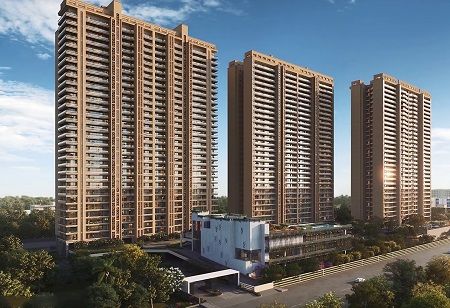
India’s 28 major listed realty firms record a 21% fall in Q1 FY27 sales bookings to ₹39,964 crore. Godrej Properties leads with ₹8,651 crore, while fewer launches, cautious buyers and global uncertainties weigh on overall demand.
India’s major listed real estate developers record a 21% decline in collective sales bookings during the April-June quarter of 2026-27, reflecting softer volumes, fewer project launches and cautious buyer sentiment amid global economic uncertainties. The combined pre-sales of 28 major listed realty companies stand at nearly ₹39,964 crore, compared with ₹50,900 crore in the same quarter a year earlier.
The housing segment accounts for the largest share of the bookings. Despite the overall slowdown, 19 of the 28 developers report year-on-year growth in pre-sales, indicating that demand remains resilient for several established players. Nine companies, however, report lower sales bookings during the quarter.
Also Read: Global Real Estate as a Long-Term Wealth Strategy
Godrej Properties emerges as the largest listed real estate developer by sales bookings, recording ₹8,651 crore during the quarter, up from ₹7,082 crore in the corresponding period last year. Prestige Estates Projects ranks second with ₹6,579.3 crore, although its bookings fall sharply from ₹12,126.4 crore a year earlier.
Lodha Developers reports a modest increase in pre-sales to ₹4,630 crore from ₹4,450 crore, while Sobha posts a stronger rise to ₹3,656 crore from ₹2,079 crore. Other developers such as Puravankara, Kalpataru, Max Estates, Mahindra Lifespace, Embassy Developments and Raymond Realty also record growth during the quarter.
DLF, India’s largest real estate company by market capitalisation, records one of the steepest declines, with sales bookings dropping to ₹657 crore from ₹11,425 crore. The company does not launch any new project during the quarter, significantly affecting its pre-sales performance.
Industry observers attribute the broader decline to a combination of limited new launches, a high base from the previous year and cautious home buyer sentiment. Global economic uncertainty, including concerns linked to the West Asia conflict, also weighs on purchasing decisions.
Also Read: How MICE tourism is shaping the future of hotel industry
Despite the weak first-quarter performance, industry experts expect sales activity to improve from the second quarter as developers introduce new projects and buyer confidence strengthens. The latest figures suggest that while India’s residential real estate market faces a temporary slowdown, demand remains comparatively strong among leading developers with active project pipelines.
We use cookies to ensure you get the best experience on our website. Read more...
Copyright © 2026 HomesIndiaMagazine. All Rights Reserved.
