

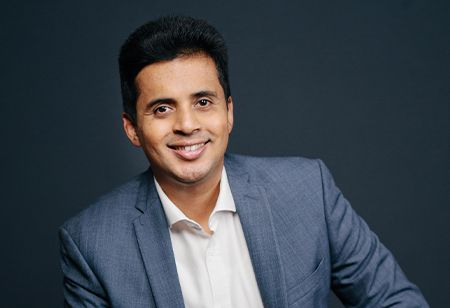
In an exclusive interaction with Adlin Pertishya Jebaraj, Correspondent at Homes India, Adarsh Narahari, Founder and Managing Director of Primus Senior Living, shares his insights on how India’s senior population is fundamentally changing the Indian residential property and what they are looking for in a community to establish a lifestyle of purpose.
Adarsh is a visionary entrepreneur and a passionate advocate for active aging who has transformed the perception of ‘retirement’ living by seamlessly integrating luxury, wellness, and community. Inspired by his grandmother’s vision for dignified senior living in India, Adarsh has dedicated his career to empower elders to lead independent, purposeful lives with dignity.
How is India’s silver economy reshaping demand patterns across residential real estate and community housing formats?
The silver economy in India is developing and changing rapidly due to the increased senior population that needs independence, comfort, and good social relationships.
Elderly people are not satisfied with traditional forms of retirement these days. But rather, they want a community that provides them with safety, convenience, wellness, and engagement. This is transforming residential demand dramatically.
The developers are currently considering dedicated elderly housing communities, intergenerational districts and integrated townships where the elders will be given the freedom to live actively and at the same time remain in close proximity with their family members.
This has been experienced at Primus firsthand where the residents prefer homes that satisfy not only their physical needs but provide them with social and creative entertainment, wellness programs, and customized services. Basically, the silver economy is reinventing the concept of graceful aging, and real estate industry is responding to these desires.
Also Read: Why Mid-Luxury Homes Will Lead Mumbai's Housing Market in 2026
What are the most critical challenges in India’s current housing ecosystem when it comes to serving aging populations at scale?
One of the biggest challenges is that traditional housing is simply not designed for the unique needs of seniors. There’s often a lack of age-friendly infrastructure, accessibility features, and integrated healthcare services.
Additionally, there’s a limited awareness among developers and families about the value of purpose-built senior living solutions. Affordability and financing options also pose barriers for many seniors who want to downsize or move into specialized communities.
At scale, the sector needs to address these gaps through design innovation, proactive healthcare, and operational models that make senior living aspirational yet accessible. This has worked to create communities that integrate these elements, ensuring residents feel secure, engaged, and truly at home.
How should residential projects balance private living spaces with shared amenities to promote both autonomy and social engagement?
This is important in terms of setting the right level of privacy and community. Elderly people appreciate their privacy and autonomy, yet social interaction is equally important with respect to both physical and psychological health.
The residential project should be designed in such a way that the residents can withdraw to their own houses and at the same time offer easily accessible communal facilities that promote interpersonal communication i.e. wellness centers, lounges and cafes to zones of activities, and hobby clubs. We have emphasized the principle of choice-driven engagement to residents which can help them to make their decisions pertaining to when and how they want to take part and autonomy is never violated.
It is about building a community where social relationships are made naturally, without being forced.
Also Read: Why India's Youth Travel Market is Reshaping Hospitality
In what ways are sustainability, climate resilience, and wellness architecture intersecting with senior housing design today?
Sustainability and wellness are increasingly central to senior housing design. Materials, energy efficiency, green spaces, and natural lighting all contribute not to environmental responsibility but also to residents’ physical and mental health.
Climate-resilient design - from temperature-controlled environments to safe walkways - ensures comfort and safety for seniors, especially during extreme weather events.
For instance, at Primus, these principles are integrated into every community, combining wellness architecture, landscaped gardens, and age-friendly features with energy-conscious design. It’s about creating spaces that are safe, comfortable, and environmentally responsible, while enhancing the overall quality of life for seniors.
How do you envision India’s senior housing landscape evolving over the next 10–15 years within the broader silver economy?
In the next 10 years, I believe that the senior housing in India will transform into a niche concept, and it will become a mainstream and aspirational life choice.
With increased awareness, there will be an increase in multigenerational communities, age-specific senior precincts, and age-tech solutions offering seamless delivery of healthcare, concierge services, and wellness activities.
Experiences will be more important to the market than accommodation, and it will be interested in vibrant communities, holistic health care, and active aging.
Finally, India can develop mini blue zones - the communities which can not only prolong the lifespan but improve the quality of life amongst the seniors and make their aging experience a dignified, satisfying, and enjoyable one.
We use cookies to ensure you get the best experience on our website. Read more...
Copyright © 2026 HomesIndiaMagazine. All Rights Reserved.
