

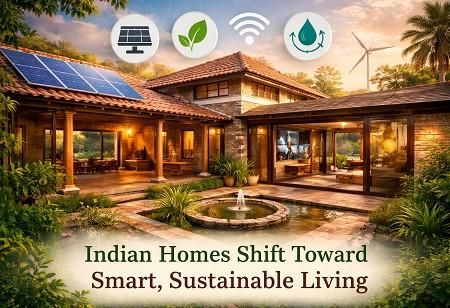
Today’s Indian homes are shaped by changing lifestyles, climate concerns, and a growing focus on sustainability. Traditional courtyard houses have been replaced with smart, technology-driven homes where owners and developers are reconsidering the design and experience of homes.
This is an evident trend of vernacular building integration with modern invention across the territories: the use of local materials, the work with the local climate, and the smart systems. Consequently, the Indian home architecture is no longer about the looks and beauty but about the production of efficient, sustainable, and future-oriented living spaces that appeal to the traditional and modern demands.
Geography, climate, and cultural diversity have always influenced India to form an architectural identity. Historically, houses used local materials and they were created to suit the climatic conditions in the region. The Indian home architecture is being transformed today due to rapid urbanisation, increased incomes and environmentalism.
Current trends are gradually merging the theoretical concepts of the traditional Indian homes together with the latest technologies, forming the hybrid model, which is balanced between the traditions and the innovations.
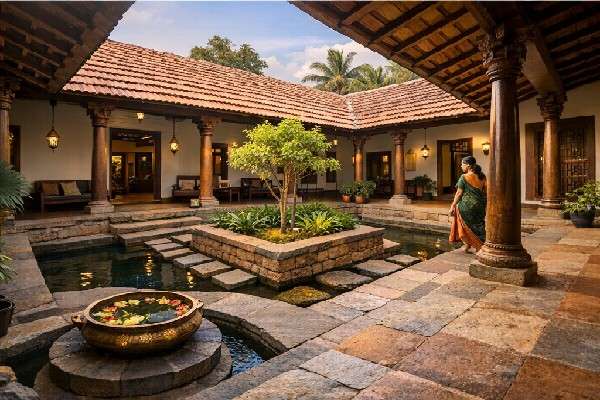
India’s regional diversity continues to define its architectural evolution:
|
Region |
Traditional Style |
Modern Adaptation |
|
North India |
Haveli homes |
Courtyard-based luxury villas |
|
South India |
Veranda-style houses |
Open-plan homes with ventilation focus |
|
Kerala |
Nalukettu |
Eco-resorts and sustainable villas |
|
Rajasthan |
Sandstone havelis |
Heritage-inspired urban residences |
|
Northeast India |
Bamboo houses |
Lightweight, sustainable housing |
These examples highlight how regional architecture India is being reinterpreted for contemporary needs.
Also Read: Shift from Metros to Suburbs: Emerging Locations & Projects
A change to green building India toward sustainable Indian homes and sustainable Indian homes is generating both opportunities and challenges:
To appeal to the environmentally friendly customers and to be up to regulatory standards, developers are increasingly investing in sustainability.
The increasing temperatures and environmental issues are propelling the use of climate-responsive housing in India. Key features include:
Passive cooling homes India on the same note are becoming popular because passive cooling homes do not require air conditioning and minimise the cost of using energy.
Modern designs are reviving courtyards, which are characteristic to traditional Indian houses. These spaces:
Courtyard houses in India are being transformed into small designs by urban developers that can fit in the city setups.
Also Read: Rise of Premium & Luxury Housing: Above INR 1 Crore
Sustainability is turning out to be a major theme in housing development. Green building India characteristics entail:
According to industry estimates:
|
Metric |
Impact |
|
Energy savings |
Up to 40% reduction |
|
Water efficiency |
20–50% savings |
|
Green building growth |
~20% annual increase |
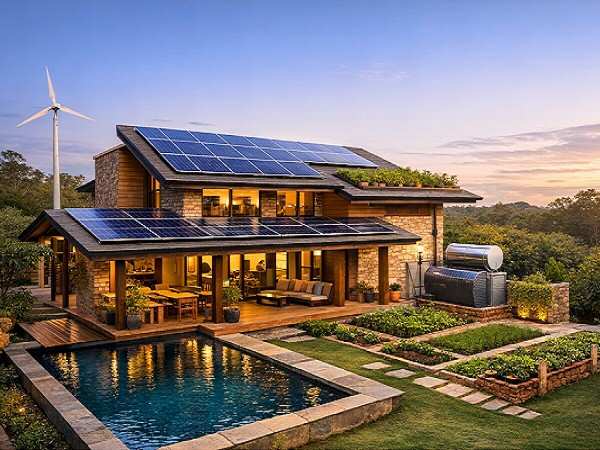
Over the next decade, Indian housing is expected to:
Indian home architecture will keep on the same trend of balancing tradition and modernity.
The housing industry in India is on the verge of transformation and here, the vernacular architecture of India, sustainability and innovation meet. With the modern designs still influenced by the regional architecture of India, it is the business of housing that is not only functional and efficient, but also meaningful and environmentally responsible with regard to the cultural context.
We use cookies to ensure you get the best experience on our website. Read more...
Copyright © 2026 HomesIndiaMagazine. All Rights Reserved.
