

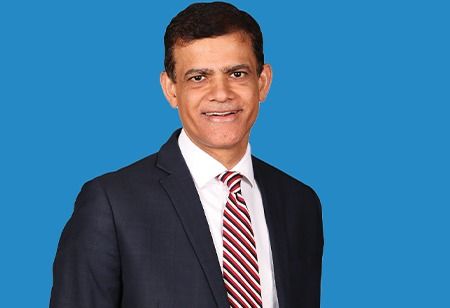
In an interaction with Homes India magazine, Anuj Puri, Chairman, ANAROCK Group, outlines the critical measures Union Budget 2026 must adopt to address structural bottlenecks in India’s housing market and unlock its full potential as a driver of sustainable economic growth.
India is at a perplexing point in its housing history. While headlines trump up record sales of luxury homes and rising real estate prices, a much darker story is unfolding behind the scenes. We are now looking at very real possibility of a two-tiered housing market that makes owning impossible for millions of Indians.
This is no time for half-measures. Budget 2026 needs to take strong action to fix India's housing market, else the gap between those who can afford luxury penthouses and those who struggle to find basic homes they can afford will only widen.
The Market Paradox - An Illusion of Growth
On the surface, it seems that India's residential real estate market is doing relatively well. The total value of homes sold in 2025 was about Rs 6 lakh crores - a very meaningful 6 percent increase over 2024, according to ANAROCK Research. In 2024, institutional investments into real estate also hit USD 8.9 billion, rising by 51 percent over the previous year. But these headlines camouflage a more worrisome reality.
While the total sales value certainly rose, the number of homes sold reduced by 14 percent in 2025. The market now clearly favors the rich. In 2024, there was a massive 170 percent increase in luxury homes sales to HNIs, NRIs, and other wealthy professionals scouting for status symbols inflation hedges.
Meanwhile, affordable housing - the most critical bellwether of inclusive economic growth, was in shambles.
Also Read: Union Budget 2026 Real Estate Wishlists Decoded
Structural Challenges
The affordable housing market went from a market share of 38 percent in 2019 to just 18 percent in 2025, according to ANAROCK Research data. Far from being a cyclical downturn that improves in tandem with market revival, it is a structural crisis that needs urgent attention.
In 2018, over 52 percent of new homes in India's top 7 cities were priced under Rs 50 lakh. By 2025, that number is at a lamentable 17 percent. In the metros, only 17 percent of new homes are now fall within the Rs. 50 lakhs price bracket. This drop in affordable housing supply has resulted in a humongous urban housing shortage in cities, with a shortfall of 9.4 million homes. The number may well rise to 30 million units by 2030 without policy intervention.
For regular Indians, the effects are profound. Budget-strung families are finding the cost of housing too much to handle. The ratio of equated monthly instalments (EMIs) to income has gone up from 43 percent in 2020 to 60 percent today, which is well above the sustainable level. Middle-income families' EMI-to-income ratio has gone up from 28 percent to 40 percent during the same time since home prices as well as interest rates have risen.
ANAROCK's most recent Consumer Sentiment Survey found that in Bengaluru, one of India's most dynamic cities, 42 percent of people who wanted to buy a property for less than Rs 1 crore can no longer afford it. This is even though demand for budget housing has grown by 13 percent year-on-year.
Brutal economics, not choice, keep buyers from being able to buy homes they desire, as the market just cannot 'accommodate' them at prices they can afford.
Why Developers Are Shying Away from Affordable Housing
These challenges are not driven by a lack of demand but by the economics of modern real estate development. Affordable housing offers developers margins of only 10-12 percent, while luxury projects deliver 25-30 percent or higher. The maths is clear when you consider the rising cost of land and construction, and execution challenges. The profit margins have migrated entirely upward.
The cost of land in cities has risen astronomically and construction input costs for steel, cement, and skilled labour remain elevated. Complex government approval processes create further delays and uncertainty. In this situation, a project with 12 percent margins is simply not viable if luxury projects in the same city offer 30 percent margins.
The inevitable result - many second-tier developers have rebranded mid-income projects as premium offerings and reduced their affordable housing launches in a quest for higher-ticket deals.
The current policy framework, designed a decade ago, no longer reflects market realities. The price cap for 'affordable housing' remains stuck at Rs 45 lakh — a threshold set in 2017 that bears no relation to 2025 construction costs and land prices. In Mumbai, a 600-square-foot apartment in peripheral areas now costs between Rs 60-75 lakh.
In Pune, similar units command INR 50-65 lakh. In Bengaluru and Delhi-NCR, the figures are equally disconnected from policy definitions.
Developers who attempt to build within this 45-lakh price cap are locked out of critical tax benefits. The tax holiday under Section 80-IBA, which once spurred affordable housing launches, expired in 2021 and has not been revived. Without these incentives, profitability becomes mathematically impossible. Projects simply do not launch, supply remains suppressed, and prices continue to rise.
Infrastructure is Key
While policies have become redundant, infrastructure has seen constant upgrades. The completion or announcement of major infrastructure projects in India, such as metros, motorways, ring roads, airports, and logistics corridors, always precede a major real estate revival - or even boom.
Infrastructure is about a lot more than easier commutes - it opens up new areas for development, provides the basis for new workplace ecosystems, boosts land values, and finally results in sustainable housing demand. Improved connectivity automatically attracts developers, revs up project launches, and boosts housing demand.
On the crossroads that the India housing market currently finds itself, one path leads to continued bifurcation - luxury apartments for the wealthy, informal or rental housing for the poor, and a shrinking middle class that finds it impossible to buy their own homes
We have seen this pattern play out repeatedly in cities like Bengaluru, Hyderabad, NCR and Pune. Whenever a new metro line or highway is announced, new residential development surges in the connected locations.
Also Read: 10 Successful Real Estate Entrepreneurs in India and Their Stories
What Budget 20206-2027 Can Do
Budget 2026 must sharply accelerate last-mile urban infrastructure. The National Infrastructure Pipeline and PM Gati Shakti initiatives' most recent announcements are very positive, but the pace of implementation is still not fast enough. Metro expansions, suburban rail networks, ring roads that connect outlying areas, and integrated logistics corridors should be given priority for immediate funding.
Such investments will have a big impact on the supply of housing, its affordability, and inclusive market growth.
The most direct and immediate tool the government has at its disposal is to bring back the 100 percent tax holiday for developers of affordable housing under Section 80-IBA. This incentive, which expired in 2021, was very effective at getting more developers on board to launch more affordable housing projects.
When Section 80-IBA was active (2016-2021), it played a critical catalytic role. Developers could undertake affordable housing projects with reasonable profit expectations, knowing that tax benefits would bridge the margin gap between affordable and mid-income projects.
The multiplier effect was evident: affordable housing supply accelerated, developer participation broadened, and a significant portion of new launches served the mass market.
The cost to government of reintroducing this tax holiday must be weighed against the cost of inaction. Each year without affordable housing supply represents approximately 1.5 million additional households that cannot transition to formal ownership. The social costs—financial exclusion, continued slum growth, regional inequality—are substantial and compounding.
A limited-period tax holiday for Section 80-IBA projects approved within a defined window (say, 24-36 months) would be a high-impact, fiscally defensible intervention.
The 45-lakh price cap for affordable housing is economically divorced from urban India's ground realities. These thresholds should be raised substantially and differentiated by city.
For Mumbai and the Mumbai Metropolitan Region (MMR), the affordable housing cap needs to be increased to Rs. 85 lakhs. For other major metro cities like Delhi-NCR, Bengaluru, Hyderabad, Pune, it should be no less than Rs. 75 lakhs.
These numbers are not arbitrary but reflect the actual current construction costs and land prices in these cities. A modest, well-designed 2-bedroom apartment with basic amenities is impossible within the Rs. 45-lakh cap in any major metropolitan area.
Critically, this redefinition must retain the size norms and intent of the original affordable housing mandate. The goal is not to create luxury loopholes but to ensure that first-time, middle-class homebuyers benefit from the tax benefits and subsidized financing they urgently need.
A 60-70 square meter apartment in a peripheral zone is fundamentally different from a premium offering, even if its nominal price has risen to Rs. 75 lakh.
Raising the price cap to Rs. 75-85 lakh while keeping the carpet area norms at 60-90 square meters would increase the number of homes that could be built from about 18 percent of current launches to more than 40 percent. This one policy change can potentially have the effect of immediately attracting more developers and freeing up a lot of supply that has been held back till now.
The Credit-Linked Subsidy Scheme (CLSS) was revived and reintroduced as part of the revamped Pradhan Mantri Awas Yojana – Urban 2.0 (PMAY-U 2.0) in the Union Budget 2024, when the FM announced its relaunch with updated benefits and eligibility criteria.
This is an important policy tool that has been underutilized in recent years. Union Budget 2025 brought back part of this plan, which gives interest subsidies of up to INR 1.80 lakh to eligible beneficiaries in the EWS, LIG, and some MIG categories.
Budget 2026 needs to widen and strengthen this support. The original CLSS framework, which was stopped in 2022, was very simple - eligible homebuyers got direct interest subsidies added to their loan accounts right away, which lowered their EMIs and made homeownership more affordable.
This subsidy cut interest rates by 6.5 percent for EWS and LIG borrowers for loans of up to Rs 6 lakhs with tenures up to 20 years. For mid-income home loan borrowers, subsidies of 3-4 percent on larger amounts often make the difference between affordability and unaffordability.
Budget 2026 should widen CLSS in three ways:
The cost of expanding CLSS would be high, but it would be worth it. Amid the massive shortfall of affordable housing units, if the CLSS paid out Rs 10,000–15,000 crore every year, it would directly help 1.5–2 million first-time homebuyers over the next five years. This is real, targeted help for the group that needs it the most.
Also Read: 2025 Real Estate Wrap-Up: Growth Momentum Sets Stage for 2026
Union Budget 2026 - A Key Turning Point
On the crossroads that the Indian housing market currently finds itself, one path leads to continued bifurcation - luxury apartments for the wealthy, informal or rental housing for the poor, and a shrinking middle class that finds it impossible to buy their own homes. The other path leads to balanced growth that takes everyone along - one where affordable housing supply meets demand, multiple micro-markets get added infrastructure support, and homeownership becomes attainable to all levels of society.
It is fair to say that a lot hinges on the Union Budget 2026. The policy levers are clear, time-tested, and workable. The cost to the government would doubtlessly be high, but the alternatives come with their own steep costs. Every year of delay means millions of Indian families cannot afford to buy a home - and inequality grows.
We use cookies to ensure you get the best experience on our website. Read more...
Copyright © 2026 HomesIndiaMagazine. All Rights Reserved.
