


Today, the real estate investment is evolving rapidly and the increasing numbers of people scan beyond acquisition of buildings and land. They desire accessibility, smarter and better returns. In 2026, the location of the commercial Real Estate Investment is sound despite the change in the markets.
This trend continues to move up due to record flows of capital into office, retail, and industrial spaces. Both the institutions and individual investors are interested in stable flow of income and wealth. Simultaneously, such novel methods as Real Estate crowd funding and fractional real estate investment are decreasing the entry barriers among ordinary investors.
Business premises always presented good returns as opposed to residential premises. However, technology and platforms are widening the access at this point. Real Estate Investment Platforms allow people to participate in small capital deals while meeting Online Real Estate Investments to monitor performance and risks.
Real Estate Investment Trusts (REITs) are increasingly becoming popular in India and outside India due to its liquidity and professional management. REIT markets have been reported to skyrocket in the coming few years, particularly in markets like in India, where the option of retail REITs alone can be worth thousands of crores by 2030.
“India’s REIT market has matured significantly over the last few years. With rising institutional participation and strong office fundamentals, REITs are emerging as a preferred passive real estate investment vehicle.” - Anuj Puri, Chairman, ANAROCK Group
Meanwhile, the demand of investors in diversified strategies such as syndication, REITs, crowd funding, and fractional ownership is increasing. These are the trends that are transforming people in their decisions. Passive income, without the hassles of property maintenance, is what the current day investor seeks. Passive Real Estate Investment vehicles assist in achieving that by diversifying away risk in a large number of assets.
This guide explains new ways to invest in commercial real estate in 2026. Sharing insights you can use today, whether you are a first-time investor or a seasoned real estate manager.
Also Read: Rise of Premium & Luxury Housing: Above INR 1 Crore
Commercial real estate has the oldest methods of accumulating wealth, which are still effective. Investors purchase office buildings, warehouses and business parks as well as shop complexes. The tenants tend to pay consistent rents on these properties.
Direct ownership is not a difficult conceptually. But it needs high capital. It must also have property management skills. Furthermore, investors are required to vet tenants, repair and address leasing matters. Nevertheless, the approach provides control and reliability in the cash flow in the long-term.
There are good fundamentals of office and retail spaces in 2026. These assets are being actively purchased by institutional investors. In 2025, capital inflow into commercial real estate globally increased significantly and institutional flows increased by over 40 percent.
“India’s commercial real estate market analysis shows strong fundamentals in office and retail assets despite global volatility.” - Vikas Oberoi, Chairman & Managing Director – Oberoi Realty
Value-add opportunities have also been implemented by investors. These include properties that can be enhanced to increase revenue. Statistics indicate that investors are getting a better deal quicker with the aid of technology and data analytics.
In spite of fluctuations in interest rates and market cycles, core commercial assets are appealing. It generates steady revenue through long leases and commands high tenant interest in prime settings.
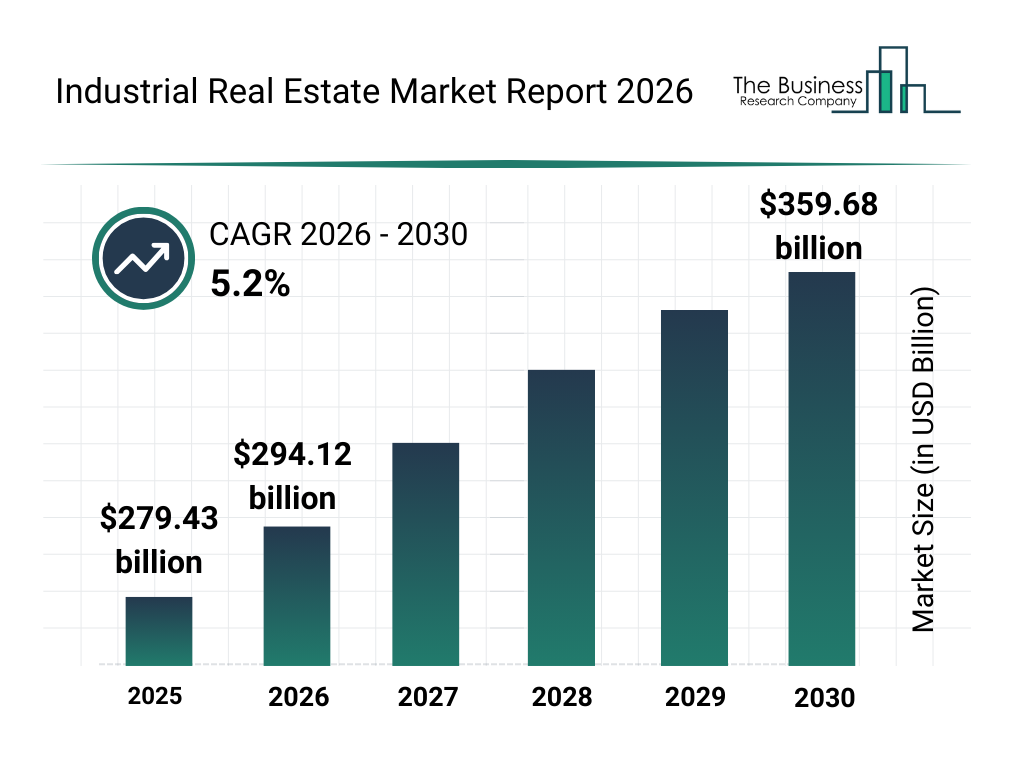
Growth of Real Estate in the Industries
Note that, industrial real estate is growing at a very high rate of above 5 per cent, with a rise of USD 279 billion in 2025, and is projected to reach approximately 294 billion in 2026; a growth, which can be attributed to the need to expand logistics due to e-commerce and supply chain development.
A major shift in 2026 is the emergence of Real Estate crowd funding and Real estate crowd funding platforms. These websites enable investors to pool their funds online to purchase commercial property. Each investor owns a share. Also to note, this model eliminates the aspect of a large capital start-up.
Investors will be able to make decisions regarding projects depending on the objectives and risk level. There are platforms that concentrate on revenue generating offices and stores. Mixed portfolios are provided by others.
Real estate crowd funding in India is currently on the rise with the introduction of regulated offers and the SEBI regulations. Investors are allowed to participate with ticket sizes that are much less than those of direct ownership.
“Institutional capital continues to flow into Indian real estate, particularly income-generating commercial assets, as investors seek stable yields.” - Gaurav Pandey, MD & CEO at Godrej Properties
Such online applications also offer expected returns, risk and performance of the assets. This openness makes the Commercial Real Estate Investment simpler to comprehend by new investors. Investing components such as payments and legalism are also automated on the platforms.
The greatest risk is the reliability of the platform. Investors are encouraged to invest in platforms whose track records are good and are well regulated. Properly managed platforms can enable you to aim at constant yields even in sophisticated markets.
Also Read: Shift from Metros to Suburbs: Emerging Locations & Projects
REITs currently stand as one of the most prominent Real Estate Investment Opportunities among passive investors. It allows individuals to purchase the shares of high income generating properties without holding physical properties. REITs provide frequent dividends, liquidity and commercial market exposure.
In countries such as India, it is reported that the REIT ecosystem will grow tremendously by the year 2030. REITs of retails and office alone had the potential to generate multi-billion dollar opportunities.
The access is also further diversified with fractional ownership. In this case, shareholders purchase an asset or trust a share. In this manner, they can participate in commercial buildings which are of high value but require smaller capital, which in most cases begin with low minimums. These are models that provide more expected returns and tend to outperform the returns of conventional instruments.
Professional management is also offered in most fractional setups. Rents and capital gains are passive income to the investors, without the operational load.
Although these techniques make barriers to entry low, liquidity may be scarce and investors have to consider holding period when planning.
Real estate syndication unites investors to invest in large transactions. The deal is found by a sponsor and investors are limited partners. This is characteristic of large office or industrial plays. Syndication may be applied to Commercial Property Funds, which are diversified in terms of location and tenant.
Investments can be focused on areas such as warehousing or technology parks. This diversification has the ability to smooth out the risk and provide more stable returns.
“Real estate syndication allows investors to pool capital for high-value commercial assets while sharing risk effectively.” - Ravindra Pai, Managing Director – Century Real Estate
The investors also consider ETFs that have commercial property stocks and REITs. These offer access to liquidity and wide exposure.
Technology is transforming the way individuals manage and invest in property. The selection of assets and tracking their performance are automated, facilitated by data, analytics, AI, and automation. Such instruments assist investors in controlling risks and find better deals.
“Commercial property investment strategies today require data-backed decision-making and technology integration to unlock long-term value.” - Sanjay Dutt, Managing Director & CEO – Tata Realty & Infrastructure.
New developments, such as tokenization and the sale of digital shares on secure registers, are most likely to become more flexible and transparent to ownership. This renders commercial assets more affordable even to small investors.
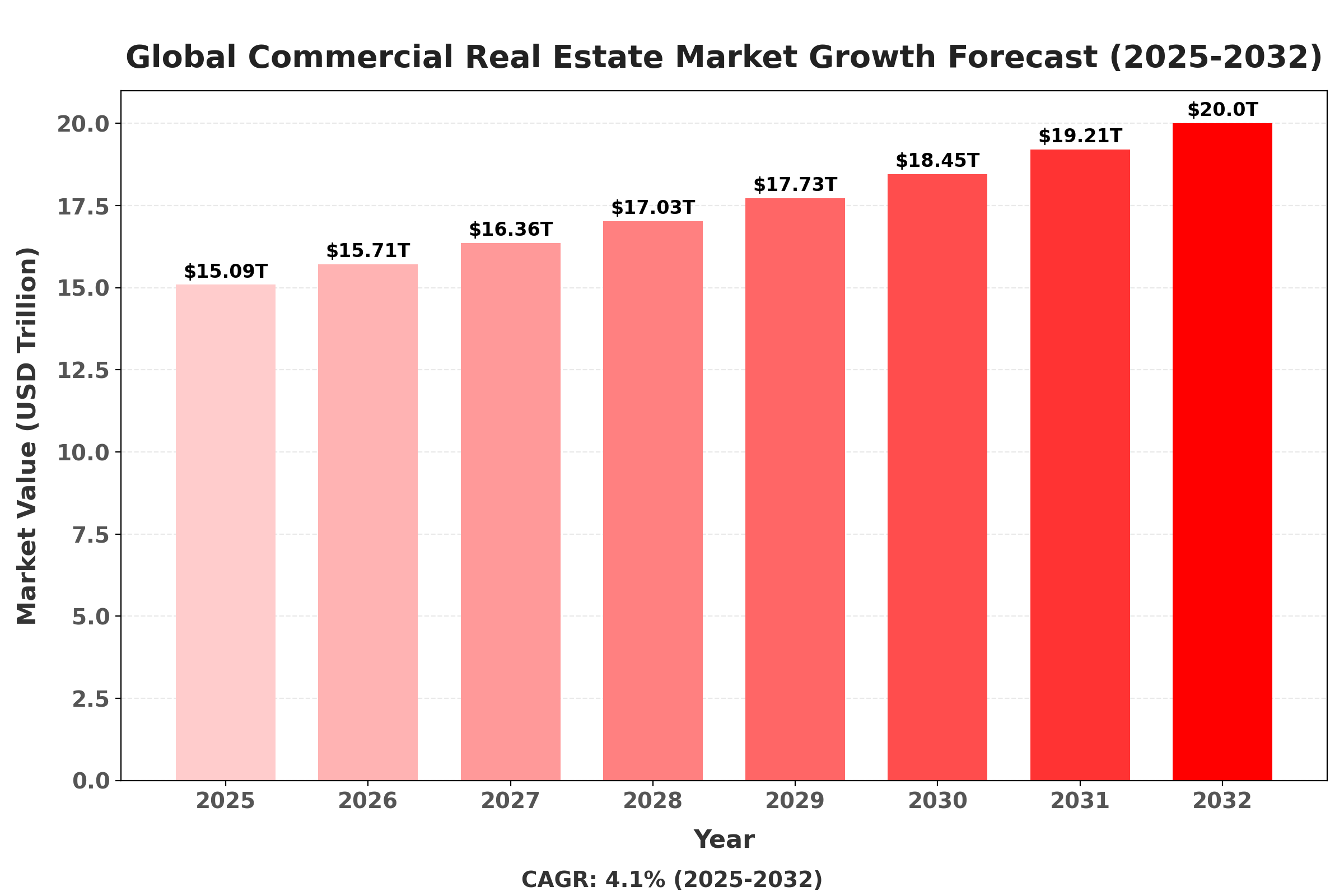
Forecast of Commercial Real Estate Market Development (2025-32) demonstrates the estimated growth of the world market to exceeding $20 trillion by 2032 with a growth rate at 4.1 per cent of CAGR. - There has been continued growth of the market in office, retail, industrial and logistics environments.
Also Read: The Evolution of Kitchen Electronics - 2026 & Beyond
The commercial real estate is also expanding in 2026 in terms of new ways to invest. Investors now have numerous avenues, starting with core commercial property purchases, moving on to real estate crowdfunding, and Online Real Estate Investment. Commercial markets are accessible to more individuals because of REIT and fractional models. Decision-making is improved with the help of technology and efficiency is upgraded through automation.
The formula for every investor is to know the goals, risk-taking capabilities, and the tools at hand. These strategies provide a variety of paths to wealth building, whether it is a steady income or the expansion over time.
Happy investing - make your commercial real estate experience a fruitful one.
We use cookies to ensure you get the best experience on our website. Read more...
Copyright © 2026 HomesIndiaMagazine. All Rights Reserved.
